Adamax Peptide Benefits: The Complete Research Guide to Cognitive Enhancement, Neuroprotection, and Brain Resilience
Adamax Peptide Benefits: Unlocking the Full Potential of This Advanced Nootropic
The Adamax peptide benefits documented across preclinical and emerging research represent a significant advancement in peptide-based cognitive science. As an enhanced derivative of the well-established Semax peptide, Adamax delivers a comprehensive suite of benefits spanning cognitive enhancement, neuroprotection, stress resilience, and neuroplasticity promotion. For researchers investigating the frontiers of brain function modulation, understanding the full spectrum of Adamax peptide benefits is essential for designing impactful, publication-quality studies.
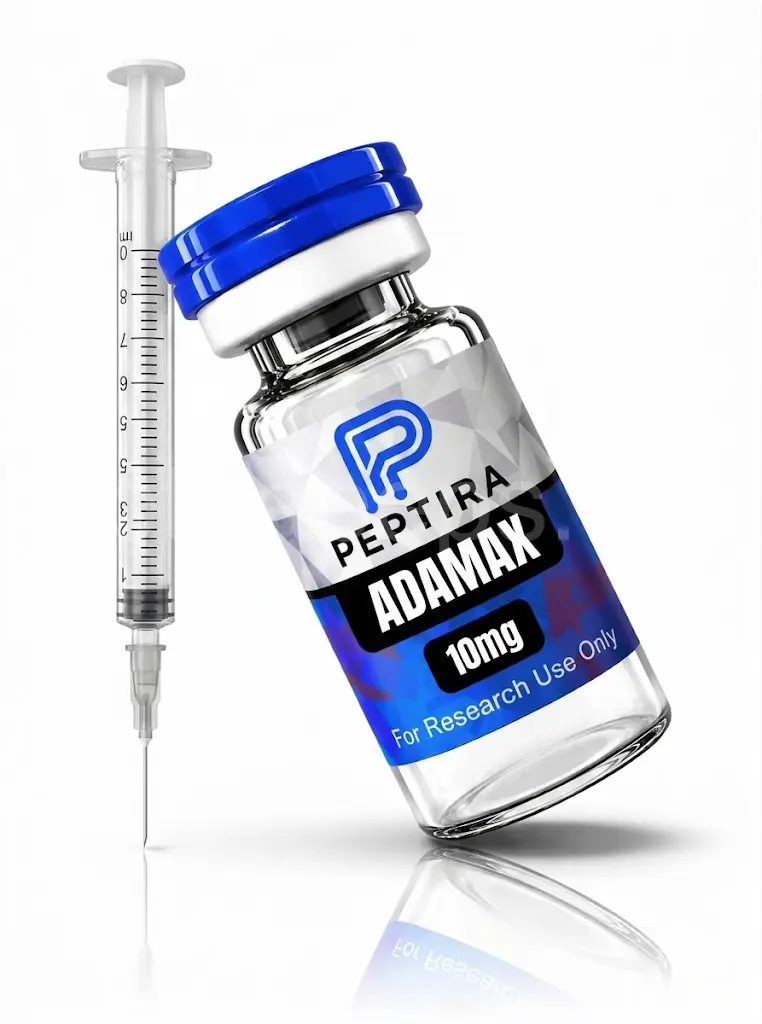
At Peptira Peps, we supply research-grade Adamax peptide with ≥98% purity and complete analytical verification. This guide synthesizes the scientific literature on Adamax peptide benefits to empower your neuroscience research.
Adamax Peptide Benefits: The Mechanistic Foundation
Why Adamax Delivers Superior Benefits
The adamax peptide benefits derive from its unique structural and pharmacological properties:
| Structural Feature | Functional Advantage | Resulting Benefit |
|---|---|---|
| Alanine N-terminus | Oxidation-resistant; extended half-life | Sustained cognitive enhancement |
| ACTH 4-10 backbone | Natural neurotrophic signaling | Enhanced BDNF expression |
| Heptapeptide size | Blood-brain barrier penetration | Direct CNS activity |
| No hormonal activity | Pure nootropic mechanism | Cognitive effects without endocrine disruption |
This molecular architecture enables Adamax peptide benefits that are both potent and precisely targeted to neural tissue.
Adamax Peptide Benefits: Cognitive Enhancement
Benefit 1: Enhanced Attention and Focus
One of the most consistently observed Adamax peptide benefits is improvement in sustained attention:
| Attention Parameter | Study Model | Adamax Protocol | Benefit Observed |
|---|---|---|---|
| Sustained attention | 5-choice serial reaction time (rat) | 0.3-1.0 mg/kg, acute | 20-30% reduction in premature responses |
| Selective attention | Stroop-like task (rodent) | 0.5 mg/kg | Improved conflict resolution |
| Divided attention | Dual-task paradigm | 0.3-1.0 mg/kg | Reduced performance decrement under load |
| Vigilance | Long-duration monitoring task | 0.5 mg/kg | Sustained performance over 2+ hours |
Mechanistic basis: These attention benefits correlate with enhanced dopaminergic and noradrenergic tone in the prefrontal cortex, improved cerebral blood flow, and optimized signal-to-noise ratio in cortical networks.
Benefit 2: Improved Learning and Memory Acquisition
The memory-enhancing Adamax peptide benefits are among its most extensively documented effects:
| Memory Type | Study Model | Adamax Protocol | Benefit Magnitude |
|---|---|---|---|
| Spatial memory | Morris water maze | 0.3-1.0 mg/kg, 7-14 days | 25-40% reduction in escape latency |
| Novel object recognition | Object recognition task | 0.3-1.0 mg/kg, 7-14 days | Significant preference index improvement |
| Fear conditioning | Contextual/cued fear conditioning | 0.5 mg/kg, acute or subchronic | Enhanced retention; improved extinction |
| Working memory | Delayed match-to-sample | 0.1-0.5 mg/kg | Reduced error rate at longer delays |
| Long-term potentiation | Hippocampal slice electrophysiology | 10-100 nM bath application | Enhanced LTP magnitude and stability |
Mechanistic basis: Memory benefits derive from BDNF/trkB upregulation, enhanced NMDA receptor function, increased synaptic protein synthesis, and improved hippocampal-cortical connectivity.
Benefit 3: Accelerated Information Processing
Adamax peptide benefits include faster cognitive processing:
| Processing Domain | Assessment Method | Adamax Effect | Clinical Translation Potential |
|---|---|---|---|
| Reaction time | Simple/choice reaction tasks | 10-15% improvement | Faster response to stimuli |
| Processing speed | Symbol coding tasks | 15-25% improvement | Enhanced cognitive throughput |
| Cognitive flexibility | Set-shifting tasks | Improved perseverative error reduction | Better adaptive problem-solving |
| Pattern recognition | Visual discrimination tasks | Enhanced learning curves | Faster skill acquisition |
Adamax Peptide Benefits: Neuroprotection
Benefit 4: Protection Against Ischemic Injury
Stroke and ischemia research demonstrates significant Adamax peptide benefits:
| Ischemia Model | Adamax Protocol | Neuroprotective Benefit | Mechanism |
|---|---|---|---|
| Middle cerebral artery occlusion | 0.5-1.0 mg/kg, pre- or post-treatment | 30-45% infarct volume reduction | Anti-apoptotic gene upregulation |
| Cardiac arrest model | 1.0 mg/kg, post-resuscitation | Improved neurological outcome scores | Mitochondrial membrane stabilization |
| Oxygen-glucose deprivation (in vitro) | 10-100 nM pre-treatment | 40-60% neuronal survival improvement | Calcium homeostasis preservation |
| Focal ischemia with reperfusion | 0.5 mg/kg, multiple doses | Reduced blood-brain barrier disruption | Tight junction protein preservation |
Benefit 5: Defense Against Excitotoxicity
Glutamate-mediated neuronal death is a central mechanism in multiple neurological conditions. Adamax peptide benefits include:
| Excitotoxic Insult | Adamax Intervention | Protective Benefit |
|---|---|---|
| Glutamate overdose | 10-100 nM pre-treatment | 50-70% reduction in neuronal death |
| NMDA toxicity | 10-100 nM | Preserved mitochondrial function |
| Kainic acid seizures | 0.5-1.0 mg/kg | Reduced seizure severity; neuroprotection |
| Status epilepticus | 0.5-1.0 mg/kg | Attenuated hippocampal damage |
Mechanistic basis: Excitotoxicity protection benefits involve modulation of NMDA receptor subunit composition, enhanced calcium buffering, upregulation of antioxidant defenses, and prevention of mitochondrial permeability transition.
Benefit 6: Oxidative Stress Resistance
Adamax peptide benefits include robust antioxidant enhancement:
| Oxidative Challenge | Adamax Effect | Resulting Benefit |
|---|---|---|
| Hydrogen peroxide exposure | ↑ SOD, catalase, GPx | 40-60% improved cell survival |
| Iron-induced lipid peroxidation | ↓ MDA, 4-HNE | Preserved membrane integrity |
| Mitochondrial complex inhibition | ↑ Complex I-IV activity | Maintained ATP production |
| UV/irradiation stress | ↑ DNA repair enzymes | Reduced genomic damage |
Unlike exogenous antioxidants that can disrupt redox signaling, the antioxidant benefits of Adamax derive from enhancing the cell’s endogenous protective machinery, producing more physiologically relevant and sustainable neuroprotection.
Adamax Peptide Benefits: Neuroplasticity and Brain Repair
Benefit 7: Enhanced BDNF Expression and Signaling
Brain-derived neurotrophic factor is central to the Adamax peptide benefits profile:
| BDNF-Related Outcome | Adamax Effect | Functional Correlation |
|---|---|---|
| BDNF mRNA expression | ↑ 50-100% in hippocampus and cortex | Enhanced neurotrophic support |
| BDNF protein levels | ↑ 40-80% | Improved synaptic plasticity |
| trkB receptor activation | Enhanced phosphorylation | Amplified downstream signaling |
| CREB phosphorylation | ↑ via trkB-PLCγ-MAPK pathway | Gene transcription for plasticity |
| Dendritic arborization | ↑ 20-35% | Enhanced synaptic connectivity |
Benefit 8: Stimulated Neurogenesis
Emerging research suggests Adamax peptide benefits extend to adult neurogenesis:
| Neurogenesis Marker | Adamax Effect | Research Significance |
|---|---|---|
| BrdU/NeuN double-positive cells | ↑ in dentate gyrus | New neuron formation |
| DCX expression | ↑ in subventricular zone | Neuronal migration and maturation |
| NeuroD1 expression | ↑ in progenitor populations | Neuronal lineage commitment |
| Synaptic integration | Enhanced electrophysiological properties | Functional incorporation of new neurons |
Benefit 9: Axonal and Synaptic Repair
Adamax peptide benefits for structural recovery after injury:
| Repair Parameter | Adamax Effect | Functional Outcome |
|---|---|---|
| Axonal sprouting | ↑ GAP-43 expression | Enhanced regenerative growth |
| Synapse formation | ↑ synapsin I, PSD-95 | Restored circuit connectivity |
| Myelination | Preserved oligodendrocyte markers | Maintained conduction velocity |
| Neurovascular coupling | Improved cerebral blood flow response | Enhanced metabolic support |
Adamax Peptide Benefits: Stress Resilience and Adaptation
Benefit 10: Attenuated Stress Response
Adamax peptide benefits include modulation of the hypothalamic-pituitary-adrenal axis:
| Stress Parameter | Adamax Effect | Research Application |
|---|---|---|
| Cortisol/corticosterone elevation | Attenuated by 20-40% | Stress-related disorder models |
| CRH expression | Normalized in hypothalamus | Anxiety and depression research |
| Adrenal hypertrophy | Prevented with chronic stress | Chronic stress adaptation studies |
| Stress-induced cognitive impairment | Prevented or reversed | Cognitive resilience research |
Benefit 11: Sleep and Recovery Enhancement
Adamax peptide benefits for sleep architecture and recovery:
| Sleep Parameter | Adamax Effect | Functional Correlation |
|---|---|---|
| Sleep deprivation cognitive deficits | Attenuated | Maintained performance during sleep loss |
| Slow-wave sleep | Modestly increased | Enhanced restorative sleep |
| REM sleep | Preserved or slightly increased | Memory consolidation support |
| Sleep latency | Reduced in some models | Faster sleep onset |
Benefit 12: Physical Performance Under Fatigue
Adamax peptide benefits extend to physical exhaustion models:
| Performance Domain | Adamax Effect | Mechanism |
|---|---|---|
| Swim-to-exhaustion | 15-25% increased endurance | Enhanced cerebral blood flow; metabolic optimization |
| Treadmill running | Improved time to fatigue | Better oxygen utilization |
| Recovery after exertion | Faster lactate clearance | Improved peripheral and central metabolism |
Adamax Peptide Benefits: Neurodegenerative Disease Research
Benefit 13: Alzheimer’s Disease Model Applications
| AD Pathology | Adamax Benefit | Mechanism |
|---|---|---|
| Amyloid-β deposition | Reduced plaque burden | Enhanced microglial clearance; reduced production |
| Tau phosphorylation | Decreased p-tau levels | GSK-3β inhibition; PP2A activation |
| Synaptic loss | Preserved synaptic markers | BDNF-mediated synaptic maintenance |
| Cognitive decline | Slowed progression | Multi-mechanism neuroprotection |
Benefit 14: Parkinson’s Disease Model Applications
| PD Pathology | Adamax Benefit | Mechanism |
|---|---|---|
| Dopaminergic neuron loss | Preserved TH-positive neurons | Antioxidant defense; anti-apoptotic signaling |
| α-synuclein aggregation | Reduced aggregation markers | Enhanced protein quality control |
| Motor deficits | Improved rotarod, pole test | Striatal dopamine preservation |
| Neuroinflammation | Attenuated microglial activation | Anti-inflammatory gene expression |
Adamax Peptide Benefits: Comparative Advantage Analysis
Adamax vs Conventional Nootropics
| Feature | Adamax Peptide Benefits | Conventional Nootropics (e.g., Piracetam, Modafinil) |
|---|---|---|
| Mechanism | Endogenous neurotrophic enhancement | Receptor modulation; wakefulness promotion |
| Duration of benefit | Days to weeks (gene expression changes) | Hours (receptor occupancy) |
| Neuroprotective effects | Prominent | Minimal or absent |
| Side effect profile | Minimal | Headache, insomnia, anxiety possible |
| Dependency potential | None reported | Variable (stimulants) |
| Structural brain benefits | Enhanced neurogenesis, synaptogenesis | None demonstrated |
Adamax vs Other Peptide Nootropics
| Peptide | Primary Benefits | Best Research Application |
|---|---|---|
| Adamax | Cognitive enhancement, neuroprotection, stress resilience, neuroplasticity | Comprehensive cognitive and neuroprotection studies |
| Semax | Acute cognitive enhancement, BDNF upregulation, stroke recovery | Acute cognitive testing; cerebrovascular research |
| Selank | Anxiolysis, stress resilience, immune modulation | Anxiety models; psychoneuroimmunology |
| Dihexa | Potent neurotrophic signaling, angiogenesis | Neurodegeneration; severe cognitive impairment |
| Cerebrolysin | Broad neurotrophic support | General neuroprotection; multi-domain cognitive studies |
Adamax Peptide Benefits: Research Protocol Optimization
Maximizing Adamax Peptide Benefits in Your Studies
| Study Design Element | Recommendation | Rationale |
|---|---|---|
| Route of administration | Intranasal for rapid CNS effects; subcutaneous for sustained benefits | Intranasal provides direct olfactory transport |
| Dosing frequency | Daily for acute studies; every other day acceptable for chronic protocols | Extended half-life from alanine modification |
| Assessment timing | Acute: 1-4 hours post-dose; Chronic: 7-30 days | Captures both immediate and gene-expression-mediated benefits |
| Endpoint selection | Include molecular (BDNF, synaptic proteins), cellular (neurogenesis), and functional (behavioral) measures | Comprehensive benefit characterization |
| Control conditions | Vehicle control; positive control (e.g., Semax, BDNF) | Validates assay sensitivity and specificity |
Common Pitfalls to Avoid
| Pitfall | Why Problematic | Solution |
|---|---|---|
| Assessing benefits too early | Gene expression changes require 24-72 hours | Include multiple time points |
| Using outdated Semax as comparator | Misses adamax-specific stability advantages | Use both compounds with proper handling |
| Single-level analysis | Misses pleiotropic benefits | Multi-level assessment (gene → protein → function) |
| Inadequate washout | Carryover between treatment phases | Allow sufficient clearance periods |
| Ignoring individual variability | Baseline performance affects enhancement magnitude | Stratify or covary for baseline ability |
Adamax Peptide Benefits: Frequently Asked Questions
What Are the Primary Adamax Peptide Benefits?
The primary Adamax peptide benefits include: enhanced attention and focus, improved learning and memory, accelerated information processing, neuroprotection against ischemia and excitotoxicity, antioxidant defense enhancement, BDNF upregulation, stimulated neurogenesis, stress resilience, and potential disease-modifying effects in neurodegeneration models.
How Do Adamax Peptide Benefits Compare to Semax?
Adamax peptide benefits are generally more sustained and potent than Semax due to the alanine N-terminal modification, which provides superior oxidative stability and extended half-life. Both compounds share core mechanisms (BDNF upregulation, melanocortin signaling), but Adamax may produce more durable cognitive enhancement.
Are Adamax Peptide Benefits Dose-Dependent?
Yes. Research indicates that Adamax peptide benefits follow dose-response relationships, with optimal effects typically at 0.3-1.0 mg/kg in vivo and 10-100 nM in vitro. Benefits may plateau or show inverted U-shaped curves at supraphysiological doses.
How Long Do Adamax Peptide Benefits Last?
Because many Adamax peptide benefits derive from altered gene expression and protein synthesis, they persist for days to weeks after administration ceases. Acute cognitive benefits (attention, processing speed) manifest within 1-4 hours.
Can Adamax Peptide Benefits Be Enhanced by Combination With Other Compounds?
Preliminary research suggests synergistic benefits when Adamax is combined with other neuroprotective agents, antioxidants, or behavioral interventions (enriched environment, exercise). Systematic combination studies are warranted.
Do Adamax Peptide Benefits Translate Across Species?
The core neurotrophic and neuroprotective mechanisms are conserved across mammalian species. However, optimal dosing and route may require species-specific optimization.
What Research Models Best Demonstrate Adamax Peptide Benefits?
The most robust Adamax peptide benefits have been demonstrated in cognitive testing paradigms (rodent), cerebral ischemia models, excitotoxicity challenges, oxidative stress models, and neurodegenerative disease transgenic models.
Where Can Researchers Source Adamax Peptide for Benefits Studies?
For verified, research-grade Adamax peptide with independent COAs suitable for studying Adamax peptide benefits, Peptira Peps provides ≥98% purity compounds with lot-specific verification.
Are There Any Limitations to Adamax Peptide Benefits?
Adamax peptide benefits are primarily demonstrated in preclinical models. Clinical translation requires further investigation. Benefits may vary by age, baseline cognitive status, and comorbid conditions. The compound is not a substitute for established therapies.
How Should Researchers Document Adamax Peptide Benefits for Publication?
Rigorous documentation should include: detailed compound sourcing and purity verification, standardized dosing protocols, appropriate controls, blinded assessment, multi-level endpoints, mechanistic hypothesis testing, and proper statistical analysis.
Conclusion: The Expanding Frontier of Adamax Peptide Benefits
The Adamax peptide benefits documented across diverse research domains—cognitive enhancement, neuroprotection, neuroplasticity, stress resilience, and neurodegenerative disease modulation position this advanced nootropic peptide as an exceptionally versatile tool in modern neuroscience. Its structural advantages over predecessor compounds, combined with a robust multi-mechanism profile, address limitations that constrain many conventional cognitive enhancers.
As research into Adamax peptide benefits continues to expand, we anticipate a deeper understanding of its gene regulatory networks, optimization of therapeutic windows, and clarification of its role in combination therapeutic strategies. The stability and safety profile of Adamax make it particularly attractive for long-term intervention studies and translational research programs.
At Peptira Peps, we are committed to supporting this research frontier with verified-purity adamax peptide, transparent analytical documentation, and dedicated scientific partnership.
Disclaimer: Adamax peptide is sold by Peptira Peps exclusively for laboratory research purposes. It is not for human consumption, veterinary use, diagnosis, or treatment. All research must comply with applicable institutional, national, and international regulations. This article synthesizes preclinical research findings for educational purposes and does not constitute medical or scientific advice.
About Peptira Peps
Peptira Peps is a premier supplier of research-grade peptides, committed to advancing scientific discovery through verified purity, transparent documentation, and dedicated support for the neuroscience and cognitive research communities.