What Is KLOW Peptide? Benefits, Ingredients & Research Guide (2026)
What Is KLOW Peptide?
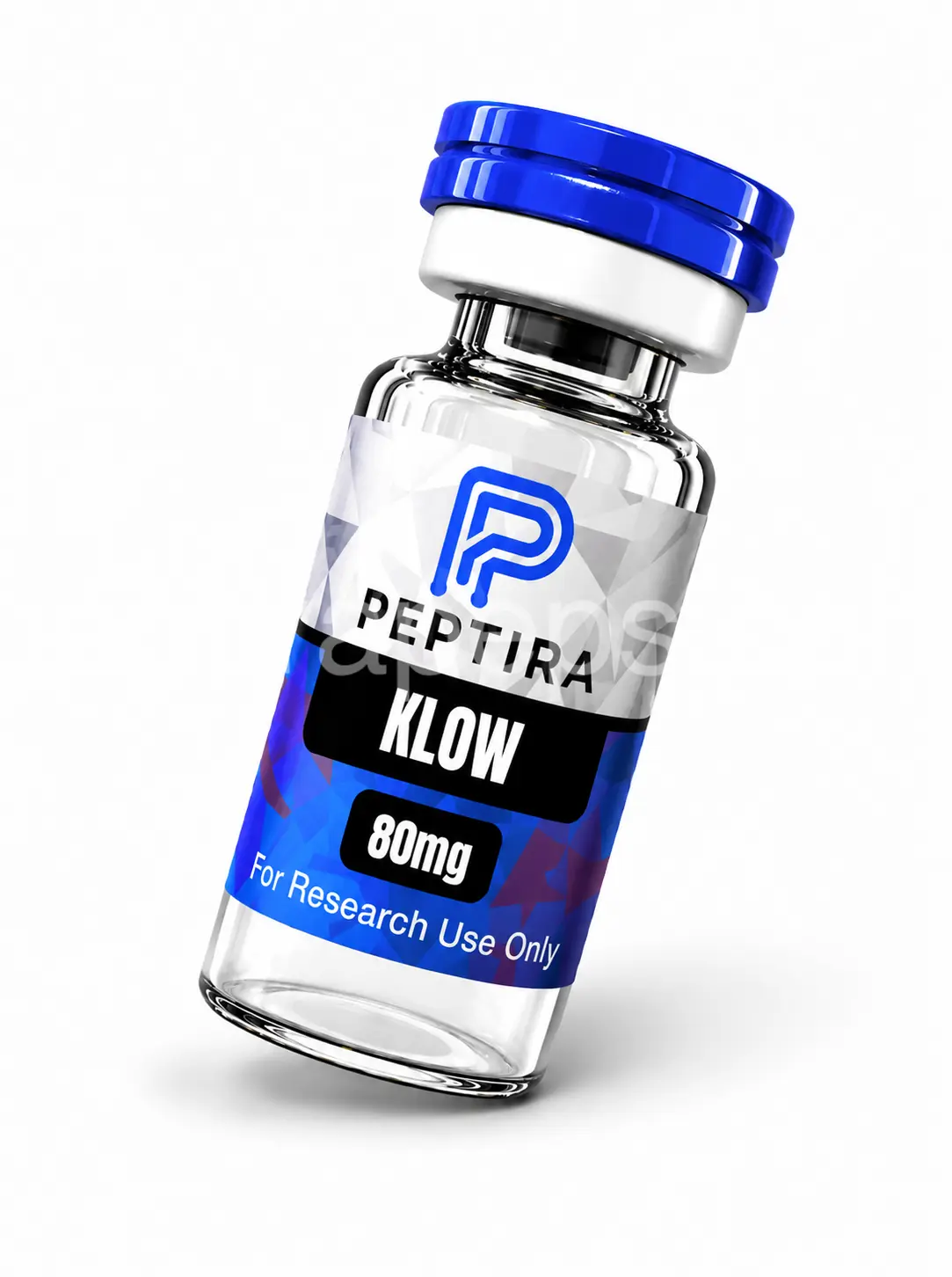
If you’ve been searching for what is KLOW peptide, you’re not alone. KLOW peptide has become one of the most talked-about research peptide blends because it combines four well-known peptides into a single formulation designed for regenerative and tissue repair research.
Unlike a single peptide, KLOW is a multi-peptide research blend containing:
- GHK-Cu
- BPC-157
- TB-500
- KPV
Each ingredient has been investigated individually for different biological functions, including tissue repair, inflammation modulation, collagen production, and recovery pathways. The blend itself is intended for research purposes, and there are currently no approved medications containing KLOW peptide.
What Is Included in KLOW Peptide?
One reason researchers are interested in KLOW peptide is because it combines four complementary research peptides.
1. GHK-Cu
GHK-Cu is a naturally occurring copper peptide that has been extensively studied for:
- Collagen production
- Skin regeneration
- Hair follicle research
- Wound healing pathways
- Cellular regeneration
Researchers often investigate GHK-Cu because of its role in tissue remodeling and extracellular matrix support.
2. BPC-157
BPC-157 is one of the most recognized peptides in regenerative research.
Studies have explored its potential role in:
- Tendon repair
- Ligament healing
- Muscle recovery
- Gastrointestinal tissue research
- Blood vessel formation (angiogenesis)
Much of the available evidence comes from laboratory and animal studies rather than large human clinical trials.
3. TB-500
TB-500 is a synthetic fragment related to thymosin beta-4.
Researchers have investigated TB-500 for:
- Cell migration
- Tissue remodeling
- Muscle recovery
- Flexibility
- Soft tissue repair
It is frequently paired with BPC-157 in regenerative research because the peptides may target different repair mechanisms.
4. KPV
KPV is a short peptide fragment derived from alpha-MSH.
Research has explored its potential involvement in:
- Inflammatory signaling
- Immune response regulation
- Gut health research
- Skin inflammation studies
KPV is considered one of the distinguishing ingredients that separates KLOW from other peptide blends.
Why Was KLOW Peptide Developed?
Instead of using four separate peptide vials, KLOW peptide combines these compounds into a single research blend.
The idea is that each peptide may contribute to a different biological pathway:
- Tissue repair
- Cellular recovery
- Collagen synthesis
- Inflammatory regulation
Researchers are studying whether combining these pathways provides broader regenerative effects than using individual peptides alone. However, controlled studies evaluating the blend itself remain limited, so conclusions about the combination should be made cautiously.
Potential Research Areas for KLOW Peptide
Current research discussions commonly include:
Tissue Repair
Several of the peptides in KLOW have been investigated for supporting tissue regeneration following injury.
Recovery Research
Laboratory research has explored whether the blend may support recovery of muscles, tendons, and connective tissues.
Skin Regeneration
GHK-Cu has been studied extensively for skin quality, collagen synthesis, and wound healing.
Inflammation Research
KPV has attracted attention because of its anti-inflammatory signaling properties in experimental models.
Gut Research
Both KPV and BPC-157 have been investigated in studies involving gastrointestinal tissues.
These remain active areas of research rather than established medical uses.
Is KLOW Peptide FDA Approved?
No.
KLOW peptide is not approved by the U.S. Food and Drug Administration (FDA) for diagnosing, treating, curing, or preventing any disease.
Most suppliers market it strictly for laboratory and research purposes.
Anyone considering peptide use should consult a qualified healthcare professional before making health decisions.
Is KLOW Peptide Safe?
Because KLOW combines four different research peptides, its overall safety profile has not been established through large human clinical trials.
Researchers generally evaluate:
- Purity
- Manufacturing quality
- Storage conditions
- Laboratory handling
High-quality research peptides should always be sourced from suppliers that provide:
- Third-party testing
- Certificate of Analysis (COA)
- High purity standards
- Proper laboratory packaging
Who Studies KLOW Peptide?
Interest in KLOW peptide has grown among research professionals studying:
- Regenerative biology
- Sports recovery mechanisms
- Tissue engineering
- Wound healing
- Inflammatory pathways
- Cellular regeneration
These investigations are intended to improve scientific understanding and should not be interpreted as evidence of proven clinical benefit.
Why Is KLOW Peptide Becoming Popular?
Several factors contribute to its growing popularity:
- Four peptides combined into one blend
- Multiple regenerative pathways under investigation
- Increasing interest in tissue repair research
- Convenient research formulation
- Expanding peptide science community
Its popularity does not replace the need for rigorous clinical evidence regarding the blend itself.
Frequently Asked Questions
What is KLOW peptide used for?
KLOW peptide is primarily marketed for laboratory and scientific research involving tissue repair, inflammation, collagen production, and regenerative biology. It is not approved as a medical treatment.
What peptides are in KLOW?
KLOW peptide contains:
Is KLOW peptide legal?
Regulations vary by country. In many jurisdictions, KLOW peptide is sold for research use only rather than as an approved medicine. Users should review local laws and regulations before purchasing.
Can beginners use KLOW peptide?
Anyone interested in peptides should first understand that KLOW is a research compound and not an approved therapeutic product. Decisions about health should always involve a qualified healthcare professional.
Choosing High-Quality Research Peptides
When purchasing research peptides, consider suppliers that provide:
- Third-party laboratory testing
- Certificate of Analysis (COA)
- High purity (typically 99%+ where verified)
- Secure shipping
- Proper cold-chain handling when required
- Transparent product information
Quality assurance is essential for reliable research outcomes.
Why Choose Peptira Peps?
At Peptira Peps, we are committed to providing premium research peptides manufactured to high quality standards.
Our commitment includes:
- High-purity research peptides
- Laboratory-tested products
- Secure worldwide shipping
- Professional customer support
- Strict quality control procedures
Whether you’re researching individual peptides or advanced peptide blends, our goal is to provide dependable products backed by quality documentation where applicable.
Final Thoughts
If you were wondering what is KLOW peptide, it is best understood as a research blend that combines GHK-Cu, BPC-157, TB-500, and KPV into a single formulation for scientific investigation.
Each ingredient has its own body of preclinical research focused on areas such as tissue repair, collagen production, wound healing, and inflammatory signaling. While the blend has attracted significant interest in the peptide research community, evidence for the combined formulation is still developing, and KLOW peptide is not an FDA-approved treatment.
For researchers seeking high-quality peptide products, sourcing from reputable suppliers that emphasize purity, transparency, and quality testing is an important first step.
Explore our complete collection of premium research peptides today on our shop page.