Adamax Peptide: The Definitive Research Guide to This Nootropic and Neuroprotective Compound
What Is Adamax Peptide? Understanding the Semax-Derivative Nootropic
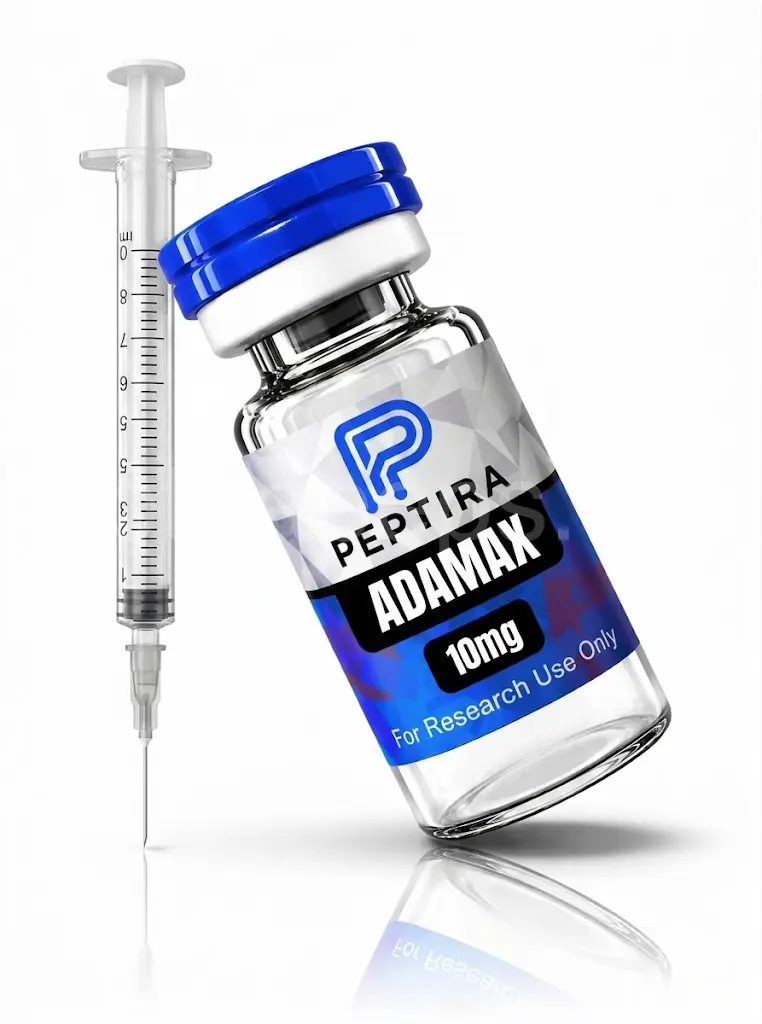
Adamax peptide is a synthetic heptapeptide nootropic and neuroprotective compound derived from the adrenocorticotropic hormone (ACTH) fragment 4-10, specifically engineered to enhance cognitive function, neuroplasticity, and cerebral resilience. Structurally related to the well-known Russian peptide Semax, adamax peptide represents an advanced iteration with modifications designed to amplify its nootropic properties while maintaining an excellent safety profile.
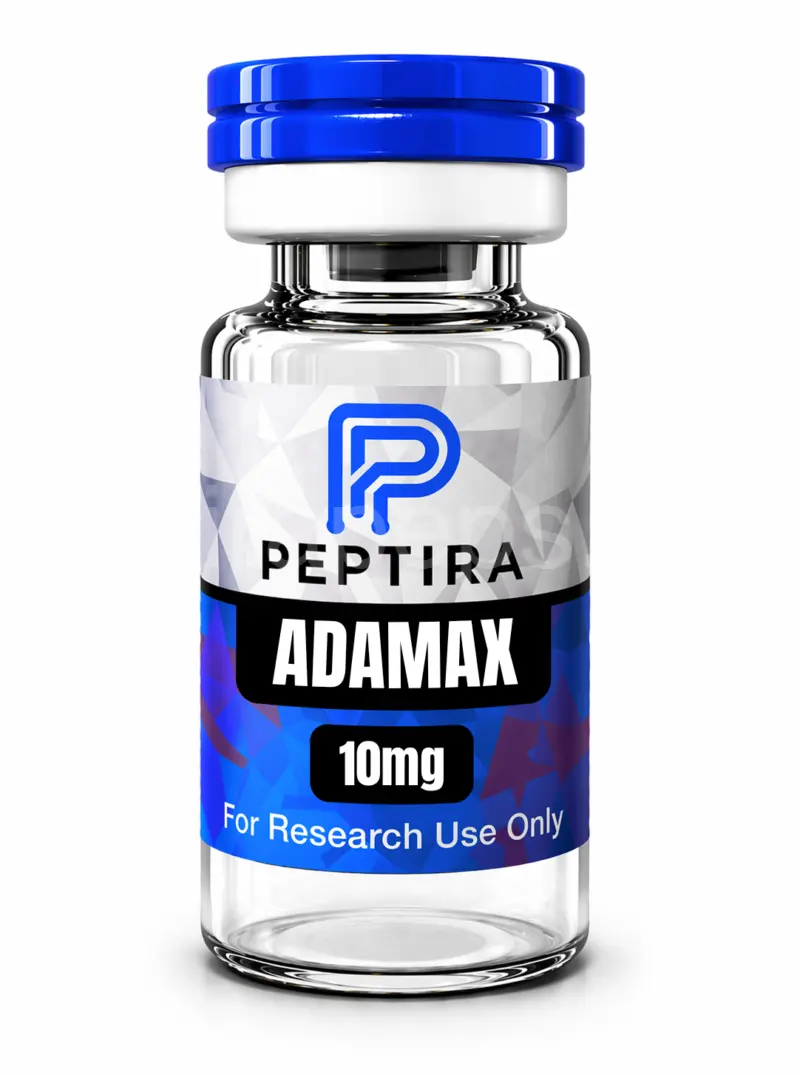
The amino acid sequence of adamax peptide is Ala-Glu-His-Phe-Pro-Gly-Pro, a seven-amino-acid chain that crosses the blood-brain barrier readily and exerts multifaceted effects on central nervous system function. At Peptira Peps, we supply research-grade adamax peptide with ≥98% purity, complete sequence verification, and independent analytical documentation for laboratories investigating cognitive enhancement, neuroprotection, and brain repair mechanisms.
Adamax Peptide: The Science Behind Its Mechanism of Action
Multi-Receptor and Multi-Pathway Activity
Adamax peptide operates through several interconnected mechanisms that distinguish it from conventional stimulant nootropics:
| Mechanism Target | Molecular Action | Functional Outcome |
|---|---|---|
| BDNF/trkB signaling | Upregulation of brain-derived neurotrophic factor and its receptor | Enhanced neuronal survival, synaptic plasticity, and long-term potentiation |
| Melanocortin receptors (MC4/MC5) | Agonism at central melanocortin receptors | Modulation of cognitive arousal, attention, and neuroprotection |
| NMDA receptor complex | Allosteric modulation | Improved synaptic transmission without excitotoxicity |
| Dopaminergic system | Enhanced dopamine synthesis and release | Improved motivation, reward processing, and executive function |
| Serotonergic system | Modulation of 5-HT receptor subtypes | Mood stabilization and anxiolytic effects |
| Cerebral blood flow | Vasodilation of cerebral vessels | Enhanced oxygen and glucose delivery to neural tissue |
The Advantage Over Semax
While structurally related, Adamax peptide offers distinct advantages:
| Feature | Adamax Peptide | Semax |
|---|---|---|
| Sequence | Ala-Glu-His-Phe-Pro-Gly-Pro | Met-Glu-His-Phe-Pro-Gly-Pro |
| N-terminal modification | Alanine (more stable) | Methionine (oxidation-prone) |
| Half-life | Extended (improved stability) | Shorter (methionine oxidation) |
| Nootropic potency | Enhanced | Established but moderate |
| Neuroprotective efficacy | Potentiated | Documented |
| Oxidative stability | Superior | Requires careful storage |
The alanine substitution at the N-terminus of adamax peptide eliminates the oxidation susceptibility of Semax’s methionine residue, producing a more stable compound with potentially superior pharmacokinetic properties.
Research Applications and Evidence
Application 1: Cognitive Enhancement and Nootropic Effects
Adamax peptide has been investigated for its effects on higher cognitive function:
| Cognitive Domain | Study Model | Adamax Protocol | Key Findings |
|---|---|---|---|
| Attention and focus | Rodent models | 0.1-1.0 mg/kg, acute | Improved sustained attention tasks; reduced distractibility |
| Learning and memory | Morris water maze | 0.3-1.0 mg/kg, 7-14 days | Enhanced spatial memory acquisition and retention |
| Executive function | Rat prefrontal cortex tasks | 0.1-0.5 mg/kg | Improved working memory and cognitive flexibility |
| Novelty seeking | Open field, novel object recognition | 0.3 mg/kg | Enhanced exploration and recognition memory |
Application 2: Neuroprotection and Brain Injury Recovery
The neuroprotective adamax peptide properties are relevant for multiple injury models:
| Injury Model | Adamax Protocol | Observed Benefit |
|---|---|---|
| Cerebral ischemia (stroke) | 0.5-1.0 mg/kg, pre- or post-treatment | Reduced infarct volume; improved neurological scores |
| Hypoxic-ischemic injury | 0.3-1.0 mg/kg | Preserved neuronal viability; reduced apoptosis |
| Glutamate excitotoxicity | 1-100 nM in vitro | Dose-dependent neuroprotection |
| Beta-amyloid toxicity | 10-100 nM | Reduced neuronal death; decreased ROS production |
Application 3: Stress Resilience and Adaptation
Research includes investigation of stress-response modulation:
| Stress Paradigm | Adamax Effect | Mechanism |
|---|---|---|
| Acute restraint stress | Attenuated cortisol elevation | HPA axis modulation |
| Chronic unpredictable stress | Prevented depressive-like behaviors | BDNF upregulation; neuroplasticity preservation |
| Sleep deprivation | Preserved cognitive performance | Enhanced cerebral blood flow; metabolic support |
| Physical exhaustion | Improved recovery markers | Antioxidant enzyme upregulation |
Application 4: Neurodegenerative Disease Research
Emerging applications in neurodegeneration models:
| Disease Model | Adamax Protocol | Preliminary Findings |
|---|---|---|
| Alzheimer’s disease (transgenic mouse) | 0.5-1.0 mg/kg, 60 days | Reduced amyloid burden; improved memory performance |
| Parkinson’s disease (MPTP model) | 0.5-1.0 mg/kg, 30 days | Preserved dopaminergic neurons; improved motor function |
| Multiple sclerosis (EAE model) | 0.3-1.0 mg/kg | Delayed disease onset; reduced demyelination |
Specifications and Quality Standards
Research-Grade Adamax Peptide from Peptira Peps
| Specification | Standard |
|---|---|
| Sequence | Ala-Glu-His-Phe-Pro-Gly-Pro |
| Molecular weight | 711.8 Da |
| Purity | ≥98% (HPLC verified) |
| Form | Lyophilized powder |
| Solubility | Readily soluble in water, saline, or PBS |
| Storage (lyophilized) | -20°C, 24+ months |
| Storage (reconstituted) | 2-8°C, 14-21 days |
| Available quantities | 5mg, 10mg, 20mg, custom bulk |
Analytical Verification
Every batch of adamax peptide from Peptira Peps includes:
- HPLC chromatogram: Purity quantification and impurity profiling
- Mass spectrometry: Molecular weight confirmation (711.8 ± 0.5 Da)
- Amino acid analysis: Quantitative composition verification
- Endotoxin testing: <0.1 EU/μg for cell culture applications
Lot Verification System
Researchers can verify their Adamax peptide batch at https://peptirapeps.com/coa/ using the unique lot number on each vial.
Research Protocol Guidelines
In Vitro Studies
| Application | Concentration Range | Duration | Endpoint Examples |
|---|---|---|---|
| Cell survival assays | 0.1-100 nM | 24-72 hours | MTT, LDH release, live/dead staining |
| BDNF expression | 1-100 nM | 6-48 hours | qPCR, Western blot, ELISA |
| Neurite outgrowth | 10-100 nM | 48-72 hours | Morphometric analysis, immunofluorescence |
| Synaptic plasticity markers | 10-100 nM | 24-48 hours | PSD-95, synapsin I Western blot |
| Oxidative stress challenge | 10 nM pre-treatment; then insult | 24 hours | ROS detection, lipid peroxidation |
In Vivo Rodent Studies
| Study Type | Route | Dose | Frequency | Duration |
|---|---|---|---|---|
| Acute cognitive testing | Intranasal or subcutaneous | 0.1-1.0 mg/kg | Single dose | Acute (1-4 hours post-dose) |
| Subchronic nootropic studies | Intranasal or subcutaneous | 0.3-1.0 mg/kg | Daily or every other day | 7-30 days |
| Neuroprotection studies | Intraperitoneal or subcutaneous | 0.5-1.0 mg/kg | Pre-treatment and/or post-treatment | Per injury model |
| Aging studies | Subcutaneous | 0.3-1.0 mg/kg | Daily | 30-90 days |
Administration Route Considerations
| Route | Bioavailability | Brain Delivery | Research Suitability |
|---|---|---|---|
| Intranasal | Moderate (~30-40%) | Direct olfactory/trigeminal transport to CNS | Excellent for CNS-targeted cognitive studies |
| Subcutaneous | Good (~60-70%) | Systemic circulation; BBB penetration | Good for chronic neuroprotection studies |
| Intraperitoneal | Good (~70-80%) | Systemic circulation; BBB penetration | Standard for acute rodent studies |
Comparison With Related Nootropic Peptides
Adamax vs Semax
| Feature | Adamax Peptide | Semax |
|---|---|---|
| Sequence | Ala-Glu-His-Phe-Pro-Gly-Pro | Met-Glu-His-Phe-Pro-Gly-Pro |
| N-terminal residue | Alanine (stable) | Methionine (oxidation-prone) |
| Half-life | Extended | Shorter |
| Nootropic potency | Enhanced | Established |
| Neuroprotective efficacy | Superior (preliminary data) | Documented |
| Storage stability | Excellent | Requires -20°C, limited shelf life |
| Research availability | Emerging | Established |
| Cost | Moderate | Moderate |
Adamax vs Selank
| Feature | Adamax Peptide | Selank |
|---|---|---|
| Primary effect | Cognitive enhancement, neuroprotection | Anxiolysis, stress resilience |
| Sequence | ACTH 4-10 derivative | Tuftsin derivative |
| Mechanism | BDNF/trkB, melanocortin, monoaminergic | GABA modulation, enkephalinase inhibition |
| Mood effects | Mild anxiolytic; primarily cognitive | Prominent anxiolytic; mild cognitive |
| Best research application | Learning, memory, attention, neuroprotection | Anxiety, stress, immune modulation |
Adamax vs Dihexa
| Feature | Adamax Peptide | Dihexa |
|---|---|---|
| Primary target | BDNF/trkB, melanocortin | HGF/c-Met (hepatocyte growth factor) |
| Mechanism | Neurotrophic factor upregulation | Direct angiogenin-like neurotrophic signaling |
| Potency | Moderate-high | Extremely potent (reportedly 7x more potent than BDNF) |
| Research stage | Emerging | Established but limited availability |
| Safety profile | Excellent (extensive ACTH derivative history) | Less characterized |
Safety Profile in Research Contexts
Preclinical Safety Data
| Parameter | Finding | Research Implication |
|---|---|---|
| Acute toxicity (LD50) | >1000 mg/kg (rodent) | Wide therapeutic index |
| Chronic administration | No organ toxicity at 1 mg/kg/day for 3 months | Safe for extended research protocols |
| Genotoxicity | Negative in standard assays | No mutagenic concern |
| Immunogenicity | No antibody formation detected | Suitable for repeated dosing |
| Hormonal effects | No significant HPA axis disruption at research doses | Pure nootropic/neuroprotective mechanism |
| Withdrawal effects | None observed | No dependency or rebound concerns |
Considerations for Research Protocols
- Species-specific responses: Rodent cognitive data may require validation in higher species
- Route-dependent effects: Intranasal delivery may produce more rapid CNS effects than systemic routes
- Timing of assessment: Acute cognitive effects (1-4 hours) vs. neuroplasticity changes (days-weeks)
- Individual variability: Baseline cognitive performance may influence magnitude of enhancement
Frequently Asked Questions
What Is Adamax Peptide?
Adamax peptide is a synthetic heptapeptide nootropic and neuroprotective compound (Ala-Glu-His-Phe-Pro-Gly-Pro) derived from the ACTH 4-10 fragment. It enhances cognitive function, promotes neuroplasticity, and protects neurons from various insults.
How Does Adamax Peptide Work?
Adamax peptide works through multiple mechanisms: upregulation of BDNF and trkB signaling, melanocortin receptor agonism, modulation of glutamate and monoamine neurotransmission, enhancement of cerebral blood flow, and activation of antioxidant defense systems.
What Is the Difference Between Adamax and Semax?
Adamax peptide differs from Semax in its N-terminal amino acid: adamax has alanine (more stable, oxidation-resistant) while Semax has methionine (prone to oxidation). This modification gives adamax peptide potentially superior stability and extended activity.
What Research Applications Use Adamax Peptide?
Adamax peptide is studied for: cognitive enhancement (attention, learning, memory), neuroprotection (stroke, TBI, excitotoxicity), stress resilience, sleep deprivation countermeasures, and neurodegenerative disease models (Alzheimer’s, Parkinson’s).
What Is the Typical Research Dosing for Adamax Peptide?
In rodent studies, adamax peptide is typically administered at 0.1-1.0 mg/kg via intranasal, subcutaneous, or intraperitoneal routes. In vitro concentrations range from 0.1-100 nM.
How Should Adamax Peptide Be Stored?
Lyophilized adamax peptide should be stored at -20°C for 24+ months. Reconstituted solutions should be kept at 2-8°C and used within 14-21 days. The alanine N-terminus provides superior stability compared to methionine-containing peptides.
Can Adamax Peptide Cross the Blood-Brain Barrier?
Yes. The small size of adamax peptide (~711 Da) and its lipophilic properties enable blood-brain barrier penetration. Intranasal administration provides additional direct CNS delivery via olfactory and trigeminal nerve pathways.
Where Can Researchers Buy Adamax Peptide?
For verified, research-grade adamax peptide with independent COAs and lot verification, Peptira Peps provides ≥98% purity compounds suitable for rigorous neuroscience research.
Is Adamax Peptide Safe for Research Use?
Preclinical safety data indicate adamax peptide has a wide therapeutic index with no significant toxicity at research doses. However, as with all research compounds, appropriate safety monitoring and institutional oversight are essential.
Can Adamax Peptide Be Combined With Other Nootropics?
Some researchers explore combination protocols, but systematic interaction studies are limited. The complementary mechanisms of adamax peptide (BDNF upregulation, melanocortin signaling) may synergize with other cognitive enhancers.
Conclusion: Adamax Peptide and the Future of Nootropic Research
Adamax peptide represents an exciting evolution in peptide-based cognitive enhancement—combining the established neurobiological foundation of ACTH-derived peptides with structural improvements that enhance stability and potentially efficacy. For researchers investigating the neurobiology of learning and memory, mechanisms of neuroprotection, and novel approaches to cognitive aging, adamax peptide offers a well-characterized, safe, and versatile research tool.
The stability advantages of adamax peptide over its methionine-containing predecessor address practical concerns that have limited some peptide research, while its multi-mechanism approach to cognitive enhancement invites sophisticated experimental designs that probe the integration of neurotrophic, vascular, and monoaminergic systems in brain function.
At Peptira Peps, we are committed to advancing this research frontier with verified-purity Adamax, transparent analytical documentation, and dedicated scientific partnership.
Disclaimer: Adamax is sold by Peptira Peps exclusively for laboratory research purposes. It is not for human consumption, veterinary use, diagnosis, or treatment. All research must comply with applicable institutional, national, and international regulations. This article is for educational and informational purposes and does not constitute medical or scientific advice.
About Peptira Peps
Peptira Peps is a premier supplier of research-grade peptides, dedicated to advancing scientific discovery through verified purity, transparent documentation, and dedicated support for the neuroscience and cognitive research communities.