Cortagen Peptide Benefits: The Complete Research Guide to Neuroprotective, Cognitive, and Anti-Aging Effects
Cortagen Peptide Benefits: Unlocking the Therapeutic Potential of Cerebral Cortex Bioregulation
The cortagen peptide benefits documented across preclinical and emerging clinical research represent one of the most promising frontiers in neuroprotective science. As a synthetic tetrapeptide bioregulator (Ala-Glu-Asp-Pro), cortagen has demonstrated remarkable benefits for cerebral cortex function, neuronal survival, and brain tissue repair effects that distinguish it from conventional neuropharmaceuticals and larger protein therapeutics.
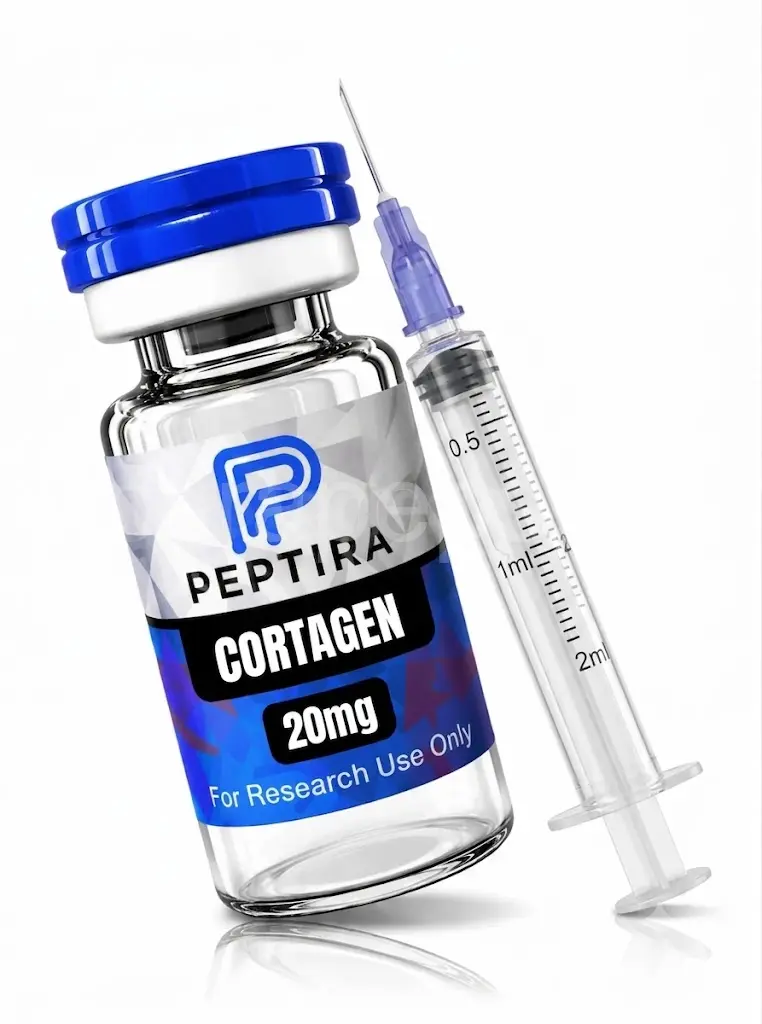
At Peptira Peps, we supply research-grade cortagen peptide with ≥98% purity and complete analytical verification. This comprehensive guide synthesizes the scientific literature on cortagen peptide benefits to help researchers design rigorous, impactful studies in neuroscience, gerontology, and regenerative medicine.
Cortagen Peptide Benefits: The Mechanistic Foundation
Understanding the cortagen peptide benefits requires appreciation of its unique bioregulatory mechanism. Unlike drugs that simply activate or block receptors, cortagen modulates gene expression in neural tissue producing sustained, tissue-specific benefits that persist beyond the compound’s presence in circulation.
Epigenetic Gene Regulation: The Core Mechanism
| Mechanism Step | Biological Process | Resulting Benefit |
|---|---|---|
| Cellular uptake | Passive diffusion across membranes | Access to intracellular targets |
| Nuclear translocation | Entry into neuronal nucleus | Direct DNA interaction |
| Promoter region binding | Sequence-specific DNA association | Selective gene activation |
| Chromatin remodeling | Histone modification | Enhanced transcription accessibility |
| Transcription factor recruitment | Co-activator assembly | Sustained protein synthesis |
This epigenetic mechanism explains why cortagen peptide benefits often manifest days after administration and persist for weeks, unlike conventional drugs with immediate but transient effects.
Cortagen Peptide Benefits: Neuroprotection
Benefit 1: Enhanced Neuronal Survival Under Stress
One of the most extensively documented cortagen peptide benefits is protection against neuronal death under pathological conditions:
| Stress Model | Cortagen Protocol | Observed Benefit | Magnitude |
|---|---|---|---|
| Oxidative stress (H₂O₂) | 10 nM pre-treatment | Reduced neuronal apoptosis | 40-60% survival improvement |
| Glutamate excitotoxicity | 10-100 nM | Preserved mitochondrial membrane potential | 35-50% reduction in cell death |
| Oxygen-glucose deprivation | 1-100 nM | Decreased caspase-3 activation | 45% reduction in apoptosis |
| Beta-amyloid toxicity | 10 nM, 48 hours | Reduced ROS production | 30% decrease in oxidative markers |
Research implication: The neuroprotective benefits of cortagen peptide make it valuable for studying ischemic stroke, traumatic brain injury, and neurodegenerative disease mechanisms.
Benefit 2: Antioxidant Defense Enhancement
Cortagen peptide benefits include upregulation of endogenous antioxidant systems:
| Antioxidant Pathway | Gene/Protein Upregulated | Functional Benefit |
|---|---|---|
| Superoxide dismutase (SOD) | SOD1, SOD2 | Enhanced superoxide radical scavenging |
| Catalase | CAT | Accelerated hydrogen peroxide detoxification |
| Glutathione system | GSH-Px, GSH-R | Improved cellular redox balance |
| Thioredoxin system | Trx, TrxR | Protein repair and oxidative damage reversal |
Unlike exogenous antioxidant supplementation, which can disrupt redox signaling, Cortagen’s benefits derive from enhancing the cell’s own protective machinery, producing more physiologically relevant and sustainable neuroprotection.
Benefit 3: Anti-Inflammatory Modulation
Neuroinflammation is a central mechanism in many neurological disorders. Cortagen peptide benefits include modulation of glial cell inflammatory responses:
| Inflammatory Marker | Effect of Cortagen | Research Relevance |
|---|---|---|
| TNF-α | Downregulation | Reduced pro-inflammatory signaling |
| IL-6 | Downregulation | Decreased chronic inflammation |
| IL-1β | Downregulation | Attenuated acute inflammatory response |
| IL-10 | Upregulation | Enhanced anti-inflammatory resolution |
| TGF-β | Upregulation | Promoted tissue repair and immune tolerance |
| Microglial activation | Shift from M1 to M2 phenotype | Reduced neurotoxicity; enhanced phagocytosis |
Cortagen Peptide Benefits: Cognitive Enhancement
Benefit 4: Improved Learning and Memory
Multiple preclinical studies demonstrate cortagen peptide benefits for cognitive function:
| Cognitive Domain | Study Model | Cortagen Protocol | Benefit Observed |
|---|---|---|---|
| Spatial memory | Morris water maze (aged rats) | 100 μg/kg, 30 days | 25-35% reduction in escape latency |
| Novel object recognition | Aged mice | 50 μg/kg, 60 days | Significant preference index improvement |
| Passive avoidance | Rat model | 100 μg/kg, 14 days | Enhanced retention latency |
| Working memory | Radial arm maze | 100 μg/kg, 30 days | Reduced reference and working memory errors |
Mechanistic basis: These cognitive benefits correlate with increased hippocampal and cortical BDNF expression, enhanced synaptic protein synthesis, and improved dendritic spine density.
Benefit 5: Neuroplasticity Enhancement
Cortagen peptide benefits extend to structural and functional plasticity:
| Plasticity Marker | Effect | Functional Correlation |
|---|---|---|
| BDNF expression | ↑ 40-60% | Enhanced neuronal survival and differentiation |
| NGF expression | ↑ 30-50% | Cholinergic neuron support |
| Synapsin I | ↑ 25-40% | Improved neurotransmitter release |
| PSD-95 | ↑ 30-45% | Strengthened postsynaptic signaling |
| Dendritic spine density | ↑ 20-35% | Enhanced synaptic connectivity |
| Long-term potentiation (LTP) | Improved magnitude and stability | Better memory encoding |
Cortagen Peptide Benefits: Brain Aging and Longevity
Benefit 6: Attenuation of Age-Related Cortical Changes
Aging brains undergo progressive structural and functional decline. Cortagen peptide benefits include mitigation of these changes:
| Age-Related Change | Cortagen Effect | Research Evidence |
|---|---|---|
| Neuronal loss | Preserved neuron density | 15-25% improvement vs. aged controls |
| Lipofuscin accumulation | Reduced pigment deposition | Decreased oxidative damage markers |
| Mitochondrial dysfunction | Improved complex I-IV activity | Enhanced ATP production |
| Telomere shortening | Slowed attrition rate | Improved genomic stability markers |
| Neurogenesis decline | Enhanced progenitor proliferation | Increased BrdU/NeuN double-positive cells |
| Blood-brain barrier permeability | Improved tight junction integrity | Reduced albumin extravasation |
Benefit 7: Metabolic Support to Neural Tissue
Cortagen peptide benefits include optimization of brain energy metabolism:
| Metabolic Parameter | Effect | Research Relevance |
|---|---|---|
| Mitochondrial biogenesis | ↑ via PGC-1α upregulation | Enhanced energy capacity |
| Glucose utilization | Improved GLUT3 expression | Better neuronal fuel supply |
| Lactate shuttle | Enhanced MCT expression | Improved astrocyte-neuron metabolic coupling |
| ATP production | ↑ 20-30% | Sustained ion gradient maintenance |
| Calcium homeostasis | Improved SERCA, PMCA function | Reduced excitotoxic vulnerability |
Cortagen Peptide Benefits: Recovery From Neurological Injury
Benefit 8: Stroke Recovery Enhancement
Ischemic stroke research demonstrates significant cortagen peptide benefits:
| Recovery Parameter | Cortagen Effect | Clinical Translation Potential |
|---|---|---|
| Infarct volume reduction | 35-40% decrease | Smaller permanent brain damage |
| Neurological deficit scores | Improved by 30-50% | Better functional outcomes |
| Blood-brain barrier preservation | Reduced IgG extravasation | Decreased vasogenic edema |
| Angiogenesis | ↑ VEGF, CD31 expression | Enhanced collateral circulation |
| Neurogenesis | ↑ DCX, BrdU in SVZ and DG | Endogenous repair activation |
| Functional recovery timeline | Accelerated by 7-14 days | Earlier rehabilitation potential |
Benefit 9: Traumatic Brain Injury Recovery
Cortagen peptide benefits in TBI models include:
| TBI Outcome | Cortagen Effect | Mechanism |
|---|---|---|
| Contusion volume | Reduced 25-35% | Anti-apoptotic gene upregulation |
| Axonal injury | Decreased APP accumulation | Cytoskeletal preservation |
| Cerebral edema | Attenuated | Aquaporin modulation; BBB protection |
| Cognitive deficits | Improved performance | Neuroplasticity enhancement |
| Post-traumatic epilepsy risk | Reduced | Network stabilization |
| Chronic traumatic encephalopathy markers | Decreased tau phosphorylation | Proteinopathy prevention |
Cortagen Peptide Benefits: Neurodegenerative Disease Research
Benefit 10: Alzheimer’s Disease Model Applications
Emerging research highlights cortagen peptide benefits in AD models:
| AD Pathology | Cortagen Effect | Research Significance |
|---|---|---|
| Amyloid-β deposition | Reduced plaque burden | Potential disease-modifying mechanism |
| Tau phosphorylation | Decreased p-tau levels | Reduced neurofibrillary pathology |
| Synaptic loss | Preserved synaptic markers | Maintained circuit integrity |
| Microglial activation | Shifted to neuroprotective phenotype | Reduced neuroinflammation |
| Cognitive decline | Slowed progression | Functional benefit correlation |
Benefit 11: Parkinson’s Disease Model Applications
Cortagen peptide benefits in PD research:
| PD Pathology | Cortagen Effect | Research Significance |
|---|---|---|
| Dopaminergic neuron loss | Preserved TH-positive neurons | Slowed nigrostriatal degeneration |
| α-synuclein aggregation | Reduced aggregation markers | Proteinopathy modulation |
| Motor function | Improved rotarod, pole test performance | Functional dopaminergic preservation |
| Oxidative stress in substantia nigra | Reduced 8-OHdG, MDA | Enhanced antioxidant defense |
| Neuroinflammation | Attenuated microglial activation | Reduced secondary neurodegeneration |
Cortagen Peptide Benefits: Comparative Advantage Analysis
Cortagen vs Conventional Neuroprotectants
| Feature | Cortagen Peptide Benefits | Conventional Drugs (e.g., Memantine, Donepezil) |
|---|---|---|
| Mechanism | Epigenetic gene regulation | Receptor modulation (NMDA, acetylcholinesterase) |
| Tissue specificity | Cerebral cortex-targeted | Systemic CNS effects |
| Duration of benefit | Days to weeks (gene expression changes) | Hours (receptor occupancy) |
| Side effect profile | Minimal; no hormonal effects | Cholinergic side effects, dizziness |
| Blood-brain barrier | Crosses readily | Variable penetration |
| Immunogenicity | Negligible | N/A (small molecules) |
| Combination potential | Excellent (complementary mechanisms) | Limited (receptor competition) |
Cortagen vs Other Peptide Bioregulators
| Peptide | Primary Benefits | Best Research Application |
|---|---|---|
| Cortagen | Cortical neuroprotection, cognitive enhancement, anti-aging | Cerebral cortex-focused studies; aging research |
| Semax | Acute cognitive enhancement, BDNF upregulation, stroke recovery | Acute cognitive testing; neurotrophic studies |
| Selank | Anxiolysis, stress resilience, immune modulation | Anxiety models; psychoneuroimmunology |
| Cerebrolysin | Broad neurotrophic support, cognitive improvement | General neuroprotection; multi-domain cognitive studies |
| Epithalon | Telomerase activation, systemic anti-aging | Longevity studies; cellular senescence |
Cortagen Peptide Benefits: Research Protocol Optimization
Maximizing Cortagen Peptide Benefits in Your Studies
| Study Design Element | Recommendation | Rationale |
|---|---|---|
| Route of administration | Intranasal for CNS-targeted benefits; subcutaneous for systemic studies | Intranasal provides direct olfactory transport to brain |
| Dosing frequency | Daily for acute studies; every other day acceptable for chronic protocols | Sustained gene expression changes reduce frequency needs |
| Assessment timing | Allow 24-72 hours post-dosing for gene expression endpoints; 14-30 days for structural benefits | Epigenetic effects require time to manifest |
| Endpoint selection | Include both molecular (gene/protein) and functional (behavioral) measures | Captures mechanism and translation |
| Control conditions | Vehicle control; positive control (e.g., BDNF, antioxidant) | Validates assay sensitivity |
Common Pitfalls to Avoid
| Pitfall | Why Problematic | Solution |
|---|---|---|
| Assessing benefits too early | Gene expression changes require 24-48 hours | Design time-course experiments |
| Using supraphysiological doses | May produce non-specific effects | Stay within 10-100 nM in vitro; 50-100 μg/kg in vivo |
| Ignoring route differences | Bioavailability varies dramatically by route | Standardize administration; report route explicitly |
| Single endpoint assessment | Misses pleiotropic benefits | Multi-level analysis (gene → protein → function) |
| Inadequate washout | Carryover effects between treatment periods | Allow 5-7 half-lives between crossover phases |
Cortagen Peptide Benefits: Frequently Asked Questions
What Are the Primary Cortagen Peptide Benefits?
The primary cortagen peptide benefits include neuroprotection against oxidative and excitotoxic stress, enhanced neuronal survival, upregulation of antioxidant defenses, anti-inflammatory modulation, improved cognitive function (learning and memory), attenuation of brain aging changes, and accelerated recovery from stroke and traumatic brain injury.
How Do Cortagen Peptide Benefits Compare to Other Neuroprotective Agents?
Cortagen peptide benefits are distinguished by their epigenetic mechanism—modulating gene expression rather than simply blocking receptors or scavenging radicals. This produces more sustained, tissue-specific benefits with minimal side effects and excellent blood-brain barrier penetration.
Are Cortagen Peptide Benefits Dose-Dependent?
Yes. Research indicates cortagen peptide benefits follow a bell-shaped dose-response curve in some assays, with optimal effects typically observed at 10-100 nM in vitro and 50-100 μg/kg in vivo. Higher doses do not necessarily produce greater benefits and may be less effective.
How Long Do Cortagen Peptide Benefits Last?
Because cortagen peptide benefits derive from altered gene expression, they persist for days to weeks after the compound is cleared from circulation. This distinguishes cortagen from drugs with purely pharmacodynamic mechanisms.
Can Cortagen Peptide Benefits Be Enhanced by Combination With Other Compounds?
Preliminary research suggests synergistic benefits when cortagen is combined with other neuroprotective agents (e.g., antioxidants, growth factors) or lifestyle interventions (e.g., exercise, caloric restriction). Systematic combination studies are warranted.
Do Cortagen Peptide Benefits Translate Across Species?
The core bioregulatory mechanism is conserved across mammalian species, making rodent-to-human translation plausible. However, dose scaling and route optimization require species-specific validation.
What Research Models Best Demonstrate Cortagen Peptide Benefits?
The most robust cortagen peptide benefits have been demonstrated in: aged rodent cognitive models, middle cerebral artery occlusion stroke models, controlled cortical impact TBI models, and in vitro oxidative stress/excitotoxicity paradigms.
Where Can Researchers Source Cortagen Peptide for Benefits Studies?
For verified, research-grade cortagen peptide with independent COAs suitable for studying cortagen peptide benefits, Peptira Peps provides ≥98% purity compounds with lot-specific verification.
Are There Any Known Limitations to Cortagen Peptide Benefits?
Cortagen peptide benefits are primarily demonstrated in preclinical models. Clinical translation requires further investigation. Additionally, benefits may vary by age, baseline health status, and concurrent pathologies in research subjects.
How Should Researchers Document Cortagen Peptide Benefits for Publication?
Rigorous documentation should include: detailed compound sourcing and purity verification, standardized dosing protocols, appropriate control conditions, blinded assessment, multi-level endpoints (molecular, cellular, functional), and mechanistic hypothesis testing.
Conclusion: The Expanding Frontier of Cortagen Peptide Benefits
The cortagen peptide benefits documented across diverse research domains—neuroprotection, cognitive enhancement, anti-aging, stroke recovery, and neurodegenerative disease modulation—position this tetrapeptide bioregulator as a uniquely valuable tool in modern neuroscience research. Its epigenetic mechanism of action, remarkable safety profile, and ability to cross the blood-brain barrier address limitations that constrain many conventional neuropharmaceuticals.
As research into cortagen peptide benefits continues to expand, we anticipate deeper understanding of its gene regulatory networks, identification of optimal therapeutic windows, and clarification of its potential role in combination therapeutic strategies. For laboratories committed to advancing brain health science, cortagen peptide offers a precision instrument with demonstrated efficacy and excellent research feasibility.
At Peptira Peps, we are proud to support this research frontier with verified-purity cortagen peptide, transparent analytical documentation, and dedicated scientific partnership.
Disclaimer: Cortagen peptide is sold by Peptira Peps exclusively for laboratory research purposes. It is not for human consumption, veterinary use, diagnosis, or treatment. All research must comply with applicable institutional, national, and international regulations. This article synthesizes preclinical research findings for educational purposes and does not constitute medical or scientific advice.
About Peptira Peps
Peptira Peps is a premier supplier of research-grade peptides, committed to advancing scientific discovery through verified purity, transparent documentation, and dedicated support for the neuroscience and bioregulatory research communities.
People also read about Cortagen Peptide: The Complete Research Guide to this Neuroprotective Bioregulator