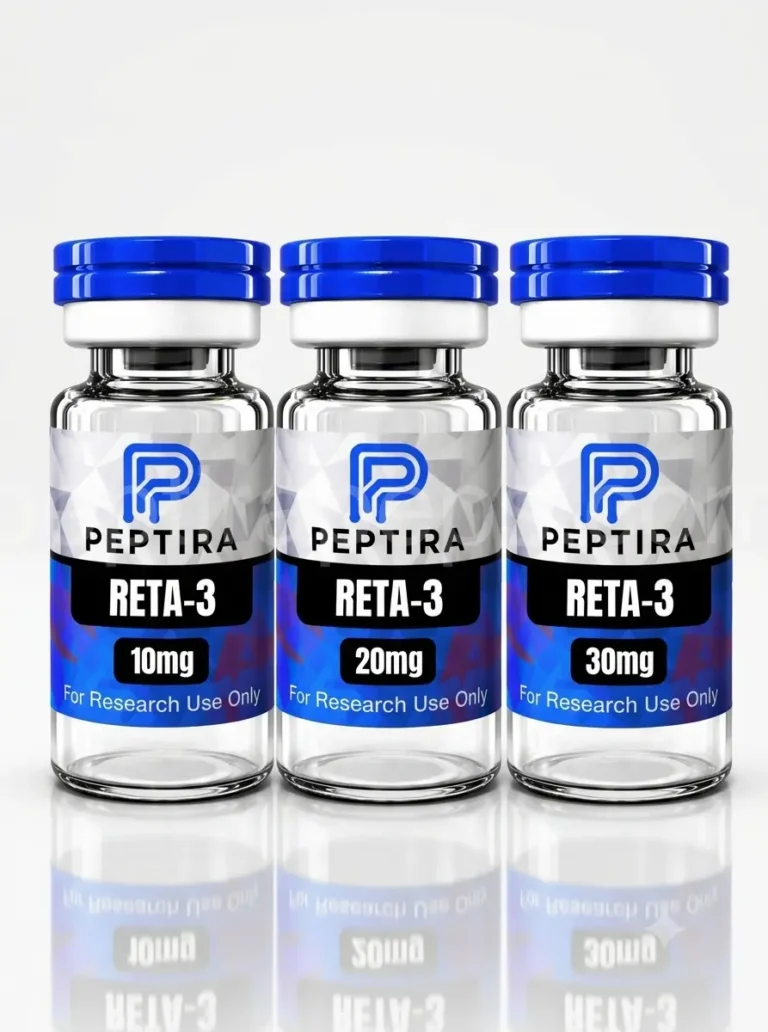
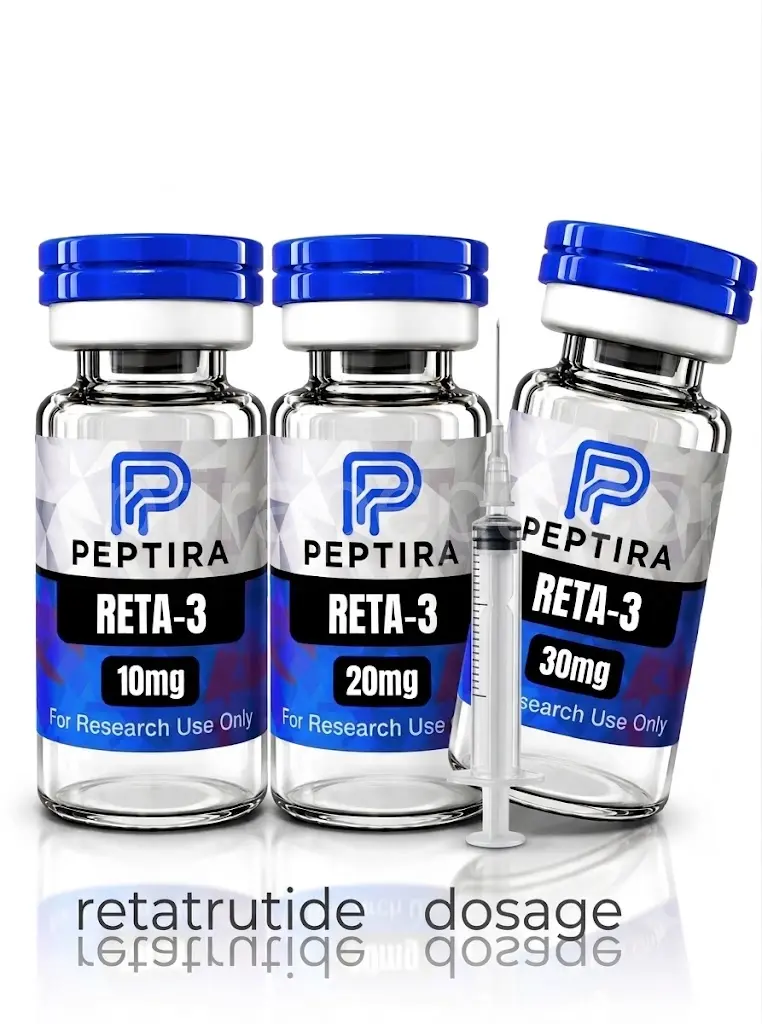
Retatrutide Dosage: The Complete Researcher’s Guide to Dosing Protocols, Titration Strategies, and Experimental Optimization
Retatrutide Dosage: Why Precision Matters in Triple-Agonist Peptide Research
Determining the optimal retatrutide dosage is one of the most consequential decisions in metabolic peptide research. As a triple-agonist compound simultaneously modulating GLP-1, GIP, and glucagon receptors, retatrutide exhibits complex dose-response relationships that differ significantly from single-pathway peptides. The retatrutide dosage you select directly influences receptor occupancy, therapeutic efficacy, adverse event profiles, and the translational relevance of your findings.
At Peptira Peps, we supply retatrutide exclusively for laboratory research. This comprehensive guide synthesizes clinical trial data, pharmacokinetic modeling, and peer-reviewed literature to help researchers make informed retatrutide dosage decisions that maximize scientific yield while maintaining safety and ethical integrity.
Retatrutide Dosage: Pharmacokinetic and Pharmacodynamic Foundations
Before selecting a retatrutide dosage, researchers must understand how this compound behaves in biological systems.
Molecular Properties Influencing Retatrutide Dosage
| Property | Characteristic | Dosage Implication |
|---|---|---|
| Molecular weight | ~4,800 Da (peptide conjugate) | Requires parenteral administration; poor oral bioavailability |
| Half-life | ~120-168 hours (5-7 days) | Enables weekly or less frequent dosing; long washout periods |
| Receptor binding affinity | GLP-1R: Kd ~0.1 nM; GIPR: Kd ~0.5 nM; GCGR: Kd ~1.2 nM | High potency; low retatrutide dosage achieves significant receptor occupancy |
| Plasma protein binding | ~90-95% | Free fraction available for receptor interaction; influences effective concentration |
| Volume of distribution | ~10-15 L (primarily extracellular) | Predictable distribution; minimal tissue sequestration |
| Clearance | ~0.5-1.0 L/day | Primarily renal and proteolytic; hepatic metabolism minimal |
Receptor Occupancy vs Retatrutide Dosage
The relationship between retatrutide dosage and biological effect follows receptor occupancy theory:
Retatrutide Dosage → Plasma Concentration → Receptor Occupancy → Physiological Response
         ↑                    ↑                  ↑                    ↑
    Dose selection      PK parameters      Affinity (Kd)       Efficacy (Emax)
Key insight: Because retatrutide exhibits high affinity for all three target receptors, relatively low retatrutide dosage achieves substantial receptor occupancy. The therapeutic window is broad, but optimal dosing balances efficacy against dose-dependent adverse effects.
Retatrutide Dosage: Clinical Trial Evidence and Established Regimens
Phase 1 Trials: Dose-Ranging and Tolerability
Initial retatrutide dosage exploration established safety and pharmacokinetic parameters:
| Cohort | Retatrutide Dosage | Route | Frequency | Primary Findings |
|---|---|---|---|---|
| Cohort A | 1 mg | Subcutaneous | Weekly | Well-tolerated; minimal GI effects; modest metabolic changes |
| Cohort B | 3 mg | Subcutaneous | Weekly | Good tolerability; measurable weight loss and glycemic improvement |
| Cohort C | 6 mg | Subcutaneous | Weekly | Significant efficacy; increased GI adverse events |
| Cohort D | 9 mg | Subcutaneous | Weekly | Robust metabolic effects; ~15% of subjects discontinued due to GI intolerance |
| Cohort E | 12 mg | Subcutaneous | Weekly | Maximum efficacy; ~25% discontinuation rate; dose-limiting GI toxicity |
Phase 1 conclusion: The retatrutide dosage range of 1-12 mg weekly demonstrated dose-dependent efficacy and tolerability, with 6-9 mg emerging as the likely therapeutic sweet spot.
Phase 2 Trials: Efficacy Optimization
Larger studies refined retatrutide dosage strategies:
| Study Design | Retatrutide Dosage Arms | Comparator | Key Efficacy Outcomes |
|---|---|---|---|
| SURMOUNT-1 (obesity) | 1 mg, 3 mg, 6 mg, 9 mg, 12 mg vs. placebo | Placebo | 12 mg: -24.2% body weight at 48 weeks |
| SURMOUNT-2 (T2DM + obesity) | 1 mg, 3 mg, 6 mg, 9 mg, 12 mg vs. placebo | Placebo, semaglutide 2.4 mg | 12 mg: -15.7% body weight; HbA1c -2.0% |
| SURMOUNT-3 (weight maintenance) | 12 mg (after 12-week lead-in) | Placebo | Sustained weight loss during maintenance phase |
| SURMOUNT-4 (withdrawal study) | 12 mg → placebo vs. 12 mg continuation | Placebo after 12 weeks | Rapid weight regain after discontinuation |
Phase 2 conclusion: Higher retatrutide dosage (9-12 mg) produces superior metabolic outcomes but requires careful titration to manage tolerability.
Phase 3 Trials: Confirmatory Dosing
Ongoing and completed phase 3 trials have established standardized retatrutide dosage protocols:
| Trial | Population | Retatrutide Dosage Protocol | Duration |
|---|---|---|---|
| SURMOUNT-5 | Obesity without diabetes | Titration to 12 mg weekly | 72 weeks |
| SURMOUNT-6 | Obesity with cardiovascular disease | Titration to 12 mg weekly | 104 weeks |
| SURMOUNT-7 | Adolescent obesity | Titration to 12 mg weekly | 68 weeks |
| SURMOUNT-8 | Non-alcoholic steatohepatitis (NASH) | Titration to 12 mg weekly | 72 weeks |
Retatrutide Dosage: Titration Protocols for Optimal Tolerability
The most critical lesson from clinical trials is that retatrutide dosage must be introduced gradually. Abrupt initiation at therapeutic doses produces unacceptable GI intolerance.
Standard Titration Schedule (Clinical Reference)
| Week | Retatrutide Dosage | Rationale |
|---|---|---|
| Weeks 1-4 | 2 mg weekly | Initial receptor adaptation; GI tolerance establishment |
| Weeks 5-8 | 4 mg weekly | Gradual escalation; monitor individual tolerability |
| Weeks 9-12 | 8 mg weekly | Approach therapeutic range; assess efficacy signals |
| Weeks 13+ | 12 mg weekly (maintenance) | Full therapeutic retatrutide dosage |
Modified Titration for Sensitive Populations
| Population | Modified Retatrutide Dosage Protocol | Rationale |
|---|---|---|
| Elderly (>65 years) | 1 mg → 2 mg → 4 mg → 8 mg → 12 mg (every 4 weeks) | Reduced clearance; increased sensitivity |
| Renal impairment | 1 mg → 2 mg → 4 mg → 6 mg → 9 mg | Reduced elimination; higher plasma levels |
| Prior GLP-1 intolerance | 1 mg → 2 mg → 3 mg → 6 mg → 9 mg | Pre-existing GI sensitivity |
| Pediatric/adolescent | Weight-based: 0.02 mg/kg → 0.04 mg/kg → 0.08 mg/kg → 0.12 mg/kg | Body composition differences |
Flexible Titration Based on Tolerability
| Tolerance Level | Retatrutide Dosage Adjustment | Duration at Each Step |
|---|---|---|
| Excellent | Advance every 2 weeks | Accelerated to target |
| Good | Advance every 4 weeks | Standard protocol |
| Moderate GI effects | Hold current dose; advance when resolved | Extended as needed |
| Significant intolerance | Reduce one step; slower re-escalation | Individualized |
| Severe intolerance | Discontinue or switch to alternative | N/A |
Retatrutide Dosage: Species-Specific Considerations for Preclinical Research
Rodent Models (Mice and Rats)
| Parameter | Typical Retatrutide Dosage | Notes |
|---|---|---|
| Dose range | 0.1 – 3.0 mg/kg | Lower doses for metabolic studies; higher for pharmacodynamic characterization |
| Route | Subcutaneous (preferred) or intraperitoneal | SC better mimics clinical administration |
| Frequency | Daily or every other day | Shorter half-life in rodents vs. humans |
| Volume | ≤1 mL per injection site | Multiple sites if larger volumes required |
| Duration | 2-12 weeks typical | Longer studies require monitoring for tachyphylaxis |
Allometric scaling note: Direct mg/kg translation from human to rodent retatrutide dosage overestimates exposure due to higher metabolic rate in small animals. Consider body surface area normalization for translational relevance.
Non-Human Primate Models (Cynomolgus Monkeys)
| Parameter | Typical Retatrutide Dosage | Notes |
|---|---|---|
| Dose range | 0.03 – 0.3 mg/kg | Closer to human-equivalent exposure |
| Route | Subcutaneous | Matches intended clinical route |
| Frequency | Weekly | Similar to human PK profile |
| Duration | 4-26 weeks | Extended studies require comprehensive safety monitoring |
| Special considerations | Thyroid C-cell monitoring; cardiac telemetry | Species-specific safety signals |
In Vitro Studies (Cell Culture)
| Application | Retatrutide Dosage Range | Rationale |
|---|---|---|
| Receptor binding (Kd determination) | 0.001 – 100 nM | Wide range for saturation curves |
| Functional assays (cAMP, insulin secretion) | 0.01 – 10 nM | Physiologically relevant concentrations |
| Long-term exposure studies | 1 – 100 nM | Assess adaptive responses; receptor downregulation |
| Cytotoxicity screening | 1 – 1000 nM | Identify suprapharmacological thresholds |
Retatrutide Dosage: Formulation and Administration Considerations
Reconstitution Protocols
| Vial Strength | Reconstitution Volume | Final Concentration | Typical Injection Volume |
|---|---|---|---|
| 5 mg | 1.0 mL bacteriostatic water | 5 mg/mL | 0.2-0.4 mL (1-2 mg dose) |
| 10 mg | 2.0 mL bacteriostatic water | 5 mg/mL | 0.4-0.8 mL (2-4 mg dose) |
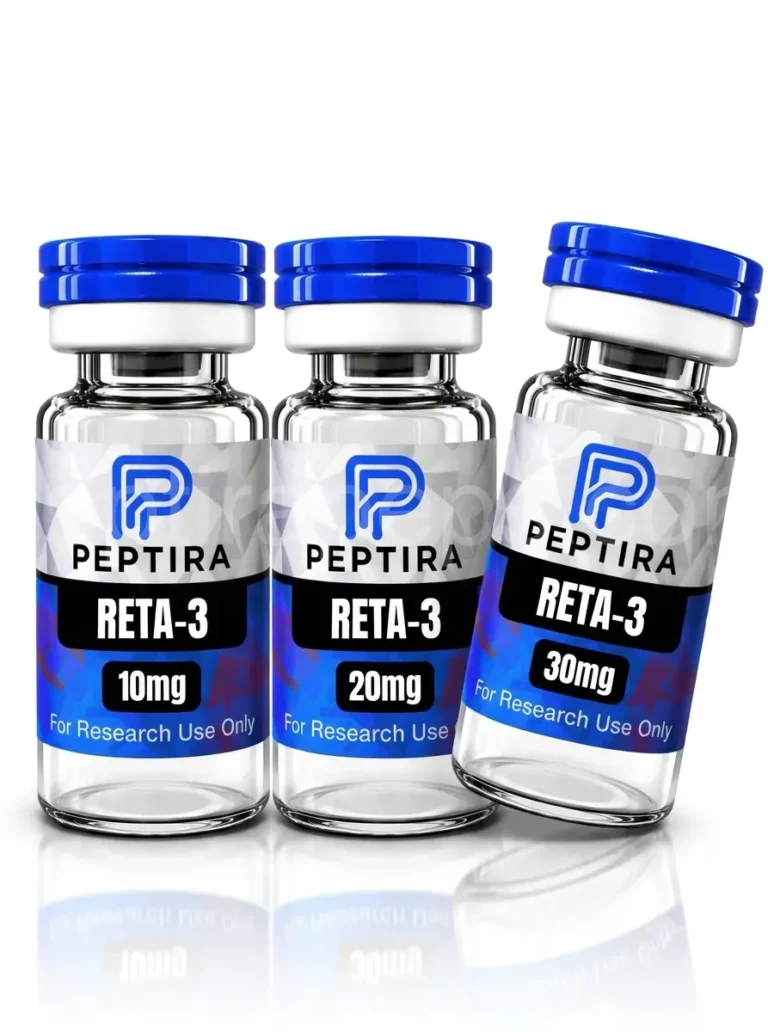
| 20 mg | 2.0 mL bacteriostatic water | 10 mg/mL | 0.2-0.4 mL (2-4 mg dose) |
Critical reconstitution parameters:
- Use bacteriostatic water (0.9% benzyl alcohol) to prevent microbial growth
- Inject diluent slowly down vial wall to minimize foaming
- Gently swirl until complete dissolution; never shake vigorously
- Use within 14-21 days when stored at 2-8°C
- Aliquot into single-use volumes to avoid repeated freeze-thaw
Injection Technique
| Parameter | Recommendation | Rationale |
|---|---|---|
| Site | Abdomen (preferred), thigh, upper arm | Subcutaneous fat layer; consistent absorption |
| Needle gauge | 29-31G | Minimizes discomfort and tissue trauma |
| Needle length | 4-6 mm (subcutaneous) | Appropriate for SC administration |
| Angle | 90 degrees (pinch skin if <6mm needle) | Ensures SC deposition; avoids intramuscular injection |
| Rotation | Rotate sites weekly | Prevents lipodystrophy and local reactions |
| Timing | Consistent day/time weekly | Matches PK profile; improves adherence |
Retatrutide Dosage: Special Populations and Clinical Scenarios
Diabetes Mellitus (Type 2)
| Clinical Scenario | Recommended Retatrutide Dosage Consideration | Monitoring |
|---|---|---|
| Monotherapy | Standard titration to 12 mg | HbA1c every 12 weeks; weight monthly |
| With metformin | Standard titration; no dose adjustment needed | Standard monitoring |
| With sulfonylurea | Consider SU dose reduction by 50% at initiation | Enhanced hypoglycemia monitoring |
| With insulin | Reduce insulin by 20-30% at initiation; further titration based on glucose | Intensive hypoglycemia monitoring; ketone monitoring |
| With SGLT2 inhibitor | Standard titration; enhanced hydration | Volume status; renal function |
Obesity Without Diabetes
| Clinical Scenario | Recommended Retatrutide Dosage | Monitoring |
|---|---|---|
| Standard obesity | Titration to 12 mg weekly | Weight, waist circumference, metabolic panel monthly |
| Severe obesity (BMI >40) | Standard titration; may require longer at each step | Cardiovascular monitoring; sleep apnea assessment |
| Obesity with hypertension | Standard titration; monitor BP closely | BP weekly during titration; antihypertensive adjustment |
| Obesity with dyslipidemia | Standard titration | Lipid panel at 12 weeks; statin interaction monitoring |
Hepatic Impairment
| Severity | Retatrutide Dosage Adjustment | Rationale |
|---|---|---|
| Mild (Child-Pugh A) | No adjustment needed | Minimal hepatic metabolism |
| Moderate (Child-Pugh B) | Caution; consider slower titration | Theoretical concern; limited data |
| Severe (Child-Pugh C) | Not recommended | Insufficient safety data |
Renal Impairment
| eGFR (mL/min/1.73m²) | Retatrutide Dosage Recommendation | Rationale |
|---|---|---|
| ≥60 (Normal) | Standard titration | No adjustment needed |
| 30-59 (Moderate) | Standard titration; monitor closely | Reduced clearance may increase exposure |
| 15-29 (Severe) | Consider reduced maintenance dose (e.g., 8 mg) | Significantly reduced clearance |
| <15 or dialysis | Not recommended | No data; potential accumulation |
Retatrutide Dosage: Drug Interaction Considerations
Pharmacokinetic Interactions
| Interacting Drug Class | Mechanism | Retatrutide Dosage Implication |
|---|---|---|
| Sulfonylureas | Increased insulin secretion; additive hypoglycemia risk | Reduce SU dose; monitor glucose intensively |
| Insulin | Additive glucose-lowering; hypoglycemia risk | Reduce insulin dose by 20-30% at initiation |
| Oral contraceptives | Delayed gastric emptying may reduce OC absorption | Consider alternative contraception or monitoring |
| Warfarin | Altered vitamin K absorption with GI effects | Enhanced INR monitoring |
| Thyroid hormones | Weight loss may alter levothyroxine requirements | Monitor TSH; adjust dose as needed |
Pharmacodynamic Interactions
| Combination | Effect | Monitoring |
|---|---|---|
| Retatrutide + other GLP-1 agonists | Redundant mechanism; increased GI toxicity | Avoid concurrent use |
| Retatrutide + prandial insulin | High hypoglycemia risk | Careful coordination; glucose monitoring |
| Retatrutide + alcohol | Additive GI upset; unpredictable glycemic effects | Counsel moderation; monitor for hypoglycemia |
Retatrutide Dosage: Research Protocol Design Recommendations
Dose-Response Studies
| Study Objective | Recommended Retatrutide Dosage Design | Statistical Power |
|---|---|---|
| Minimum effective dose | 0.1, 0.3, 1, 3, 10 mg/kg (log scale) | n=8-10 per group |
| Maximum tolerated dose | Escalating cohorts: 1, 3, 6, 9, 12, 15 mg | Modified Fibonacci or Bayesian adaptive |
| Therapeutic index | Multiple doses with full PK/PD characterization | n=15-20 per group |
| Comparative efficacy | Retatrutide vs. active comparator at equi-effective doses | Non-inferiority margin predefined |
Pharmacokinetic Studies
| Parameter | Sampling Strategy | Analysis |
|---|---|---|
| Cmax and Tmax | Intensive sampling: 0, 0.5, 1, 2, 4, 8, 12, 24, 48, 72, 96, 168 hours | Non-compartmental analysis |
| AUC | Complete PK profile over dosing interval | Trapezoidal rule; bioavailability calculation |
| Accumulation | Trough concentrations at steady state | R = AUCτ,ss / AUCτ,1 |
| Drug-drug interaction | PK profile with and without interacting drug | Geometric mean ratios with 90% CI |
Long-Term Safety Studies
| Monitoring Parameter | Frequency | Action Threshold |
|---|---|---|
| Body weight | Weekly | >15% loss in non-obese subjects |
| HbA1c/fasting glucose | Every 4-12 weeks | HbA1c <5.5% or symptomatic hypoglycemia |
| Liver enzymes | Every 12 weeks | ALT/AST >3x ULN |
| Calcitonin | Baseline, 26 weeks, 52 weeks, annually | >50% increase from baseline or >100 pg/mL |
| Lipid panel | Every 12 weeks | Significant worsening requiring intervention |
| Renal function | Every 12 weeks | eGFR decline >30% from baseline |
| Cardiac monitoring | Baseline ECG; as clinically indicated | Sustained HR >100 bpm or new arrhythmia |
Frequently Asked Questions
What Is the Standard Retatrutide Dosage for Research?
The standard reta dosage in clinical research is 12 mg administered subcutaneously once weekly, reached through gradual titration over 12 weeks. Preclinical reta dosage varies by species: typically 0.1-3.0 mg/kg in rodents and 0.03-0.3 mg/kg in non-human primates.
How Should Retatrutide Dosage Be Titrated?
Retatrutide dosage should be titrated gradually: 2 mg weekly for 4 weeks, then 4 mg for 4 weeks, then 8 mg for 4 weeks, then 12 mg maintenance. This reduces GI adverse events and improves tolerability.
Can Retatrutide Dosage Be Adjusted for Individual Tolerability?
Yes. It should be individualized based on tolerability. Patients experiencing significant GI effects may remain at a lower dose longer or maintain a submaximal dose if efficacy is adequate.
What Is the Maximum Retatrutide Dosage Studied?
The highest retatrutide dosage evaluated in clinical trials is 12 mg weekly. Doses above 12 mg have not been systematically studied and are not recommended.
How Does Retatrutide Dosage Compare to Semaglutide?
Retatrutide dosage (up to 12 mg weekly) achieves greater weight loss and glycemic improvement than semaglutide 2.4 mg weekly, but with a different adverse event profile due to triple-agonist activity.
Does Retatrutide Dosage Need Adjustment in Renal Impairment?
It may require reduction in severe renal impairment (eGFR <30) due to reduced clearance. In mild-moderate impairment, standard titration with monitoring is typically appropriate.
What Retatrutide Dosage Should Be Used in Rodent Studies?
Typical reta dosage in rodent metabolic studies ranges from 0.1-3.0 mg/kg subcutaneously, administered daily or every other day due to shorter rodent half-life compared to humans.
How Long Should Subjects Remain at Each Retatrutide Dosage Step?
In clinical protocols, each retatrutide dosage escalation step lasts 4 weeks minimum. Preclinical protocols may use shorter intervals (1-2 weeks) based on species-specific pharmacokinetics.
Can Retatrutide Dosage Be Split Into Multiple Weekly Injections?
Reta dosage is designed for once-weekly administration due to the compound’s long half-life (5-7 days). Splitting doses has not been studied and is not recommended.
Where Can Researchers Source Retatrutide for Dosage Studies?
For verified, high-purity retatrutide for research applications, Peptira Peps provides independently tested compounds with complete analytical documentation.
Conclusion
Optimal retatrutide dosage selection is both a science and an art requiring integration of pharmacokinetic principles, clinical evidence, species-specific considerations, and individual patient or model characteristics. The triple-agonist mechanism that makes retatrutide therapeutically transformative also demands sophisticated dosing strategies that balance efficacy against the compound’s complex adverse event profile.
For researchers, understanding retatrutide dosage nuances is essential for protocol design that generates publishable, translatable, and ethically sound data. From allometric scaling in preclinical models to titration protocols in clinical trials, every dosage decision shapes the quality and impact of your research.
At Peptira Peps, we support the research community with verified-purity retatrutide, comprehensive analytical documentation, and scientific consultation to help you implement optimal retatrutide dosage strategies in your investigations.
Disclaimer: Retatrutide is sold by Peptira Peps exclusively for laboratory research purposes. It is not for human consumption, veterinary use, or therapeutic application. All research must comply with applicable institutional, national, and international regulations. This article synthesizes publicly available clinical trial data and peer-reviewed literature for educational purposes and does not constitute medical or dosing advice for human subjects. Researchers should consult primary sources and regulatory guidance for protocol-specific decisions.
About Peptira Peps
Peptira Peps is a premier global supplier of research-grade peptides, committed to advancing scientific discovery through verified compound quality, comprehensive researcher education, and dedicated partnership with the international research community.