Cortagen Peptide: The Complete Research Guide to this Neuroprotective Bioregulator
What Is Cortagen Peptide? Understanding the Neuroprotective Bioregulator
Cortagen peptide is a synthetic tetrapeptide bioregulator specifically designed to target and modulate central nervous system function, particularly the cerebral cortex. Composed of the amino acid sequence Ala-Glu-Asp-Pro, it belongs to the broader class of Khavinson peptides—short peptide sequences developed through decades of Russian biogerontology research that demonstrate tissue-specific regulatory effects without hormonal activity.
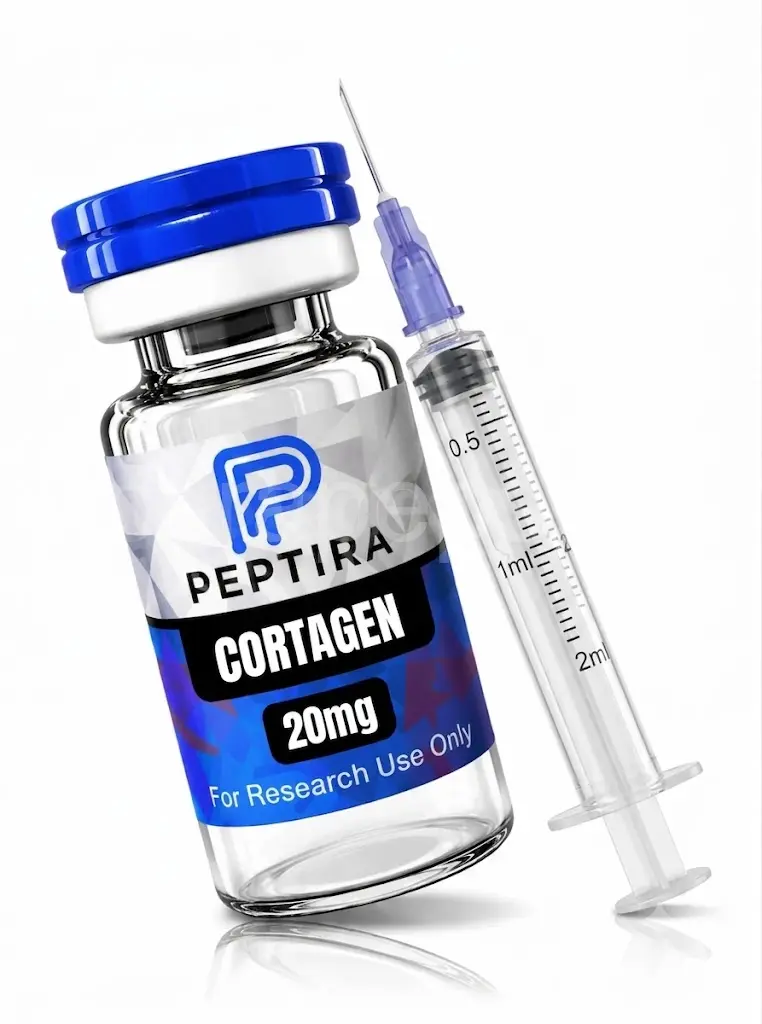
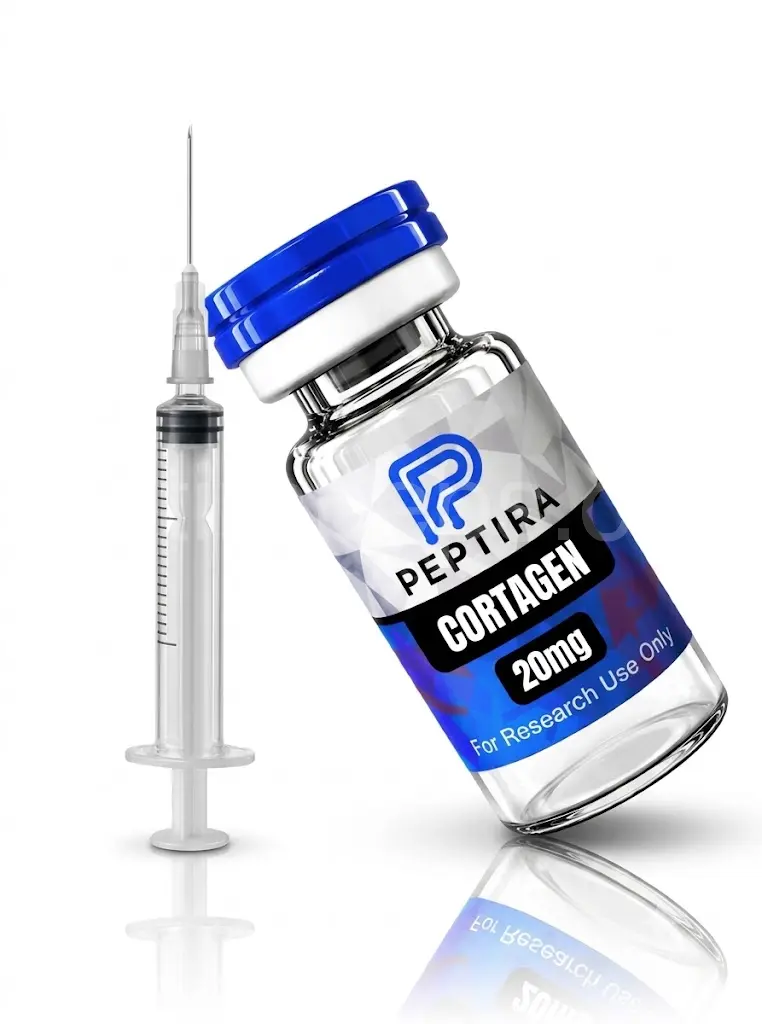
At Peptira Peps, cortagen peptide is synthesized to research-grade standards with ≥98% purity, complete sequence verification, and independent analytical documentation. For laboratories investigating neuroprotection, cognitive function, cortical tissue repair, and age-related neurological decline, it represents a unique tool in the peptide research arsenal.
The Science Behind Cortagen Peptide
Unlike conventional pharmaceuticals that force physiological changes through direct receptor agonism or antagonism, cortagen peptide operates through epigenetic modulation—specifically by influencing gene expression patterns in neuronal and glial cells. This bioregulatory mechanism distinguishes this peptide from both traditional small-molecule drugs and larger protein therapeutics.
| Characteristic | Cortagen Peptide | Traditional Neuropharmaceuticals | Protein Biologics |
|---|---|---|---|
| Molecular size | Tetrapeptide (4 amino acids, ~400 Da) | Small molecules (~200-500 Da) | Large proteins (>5,000 Da) |
| Mechanism | Epigenetic gene regulation | Receptor binding/enzyme inhibition | Receptor signaling |
| Tissue specificity | Cerebral cortex-targeted | Often systemic | Variable |
| Immunogenicity | Negligible | N/A | Significant concern |
| Blood-brain barrier | Crosses readily | Variable | Poor penetration |
| Hormonal effects | None | Variable | Often significant |
Cortagen Peptide: Mechanism of Action in Neural Tissue
Epigenetic Modulation of Gene Expression
The primary mechanism of cortagen peptide involves interaction with DNA regulatory regions in neuronal cell nuclei:
- Nuclear translocation: The small peptide crosses cellular and nuclear membranes
- DNA binding: Sequence-specific interaction with promoter regions of neuroprotective genes
- Transcription factor recruitment: Altered chromatin structure facilitates gene expression
- Protein synthesis changes: Upregulation of neurotrophic and antioxidant proteins
Target Genes and Pathways Modulated by Cortagen Peptide
Research indicates cortagen peptide influences the expression of genes involved in:
| Pathway/Function | Specific Genes/Proteins Affected | Research Relevance |
|---|---|---|
| Neurotrophic support | BDNF, NGF, GDNF | Neuronal survival and plasticity |
| Antioxidant defense | SOD, catalase, glutathione peroxidase | Oxidative stress protection |
| Anti-inflammatory signaling | IL-10, TGF-β; downregulation of TNF-α, IL-6 | Neuroinflammation modulation |
| Mitochondrial function | PGC-1α, complex I-IV subunits | Energy metabolism in neurons |
| Synaptic plasticity | PSD-95, synapsin, CAMKII | Learning and memory mechanisms |
| DNA repair | OGG1, PARP-1 | Genomic stability in post-mitotic neurons |
Cellular-Level Effects of Cortagen Peptide
| Cell Type | Observed Effect | Research Application |
|---|---|---|
| Cortical neurons | Enhanced survival under oxidative stress | Stroke and ischemia models |
| Astrocytes | Improved metabolic support to neurons | Neurodegeneration studies |
| Microglia | Shift from M1 (pro-inflammatory) to M2 (anti-inflammatory) phenotype | Neuroinflammation research |
| Oligodendrocytes | Enhanced myelination markers | Demyelination models |
| Neural stem cells | Increased proliferation and differentiation | Neurogenesis studies |
Cortagen Peptide: Research Applications and Preclinical Evidence
Application 1: Age-Related Cognitive Decline
Investigation in models of brain aging:
| Study Model | Cortagen Peptide Protocol | Key Findings |
|---|---|---|
| Aged rat cortex | 100 μg/kg intranasal, 30 days | Improved Morris water maze performance; increased cortical neuron density |
| Senescence-accelerated mice | 50 μg/kg subcutaneous, 60 days | Enhanced novel object recognition; reduced cortical lipofuscin accumulation |
| Human cortical cell culture | 10 nM, 14 days | Increased BDNF expression; improved mitochondrial membrane potential |
Application 2: Ischemic Stroke Recovery
The neuroprotective potential in cerebrovascular research:
| Study Model | Cortagen Peptide Protocol | Key Findings |
|---|---|---|
| Middle cerebral artery occlusion (rat) | 100 μg/kg, pre- and post-treatment | Reduced infarct volume by 35-40%; improved neurological scores |
| Oxygen-glucose deprivation (cell culture) | 1-100 nM | Dose-dependent reduction in neuronal apoptosis |
| Photothrombotic stroke (mouse) | 50 μg/kg intranasal, 14 days post-stroke | Enhanced functional recovery; increased peri-infarct neurogenesis |
Application 3: Traumatic Brain Injury
In TBI research models:
| Study Model | Cortagen Peptide Protocol | Key Findings |
|---|---|---|
| Controlled cortical impact (rat) | 100 μg/kg, initiated 2 hours post-injury | Reduced contusion volume; decreased axonal injury markers |
| Blast TBI (mouse) | 50 μg/kg, 7 days | Improved cognitive performance; reduced microglial activation |
| Stretch injury (human neurons) | 10 nM, immediate application | Preserved neurite integrity; reduced calcium dysregulation |
Application 4: Neurodegenerative Disease Models
Emerging research in neurodegeneration:
| Disease Model | Cortagen Peptide Protocol | Preliminary Findings |
|---|---|---|
| Alzheimer’s (APP/PS1 mouse) | 100 μg/kg, 90 days | Reduced amyloid plaque burden; improved spatial memory |
| Parkinson’s (MPTP mouse) | 100 μg/kg, 30 days | Preserved dopaminergic neurons; improved motor function |
| Multiple sclerosis (EAE rat) | 50 μg/kg, during induction phase | Delayed disease onset; reduced demyelination |
Cortagen Peptide Specifications: Research-Grade Quality Standards
Product Characteristics
| Specification | Peptira Peps Standard |
|---|---|
| Sequence | Ala-Glu-Asp-Pro (AEDP) |
| Molecular weight | 418.4 Da |
| Purity | ≥98% (HPLC verified) |
| Form | Lyophilized powder |
| Solubility | Readily soluble in water, saline, or PBS |
| Storage (lyophilized) | -20°C, 24+ months |
| Storage (reconstituted) | 2-8°C, 14-21 days |
| Available quantities | 5mg, 10mg, 20mg, custom bulk |
Analytical Verification
Every batch of cortagen peptide from Peptira Peps includes:
- HPLC chromatogram: Purity quantification and impurity profiling
- Mass spectrometry: Molecular weight confirmation (418.4 ± 0.5 Da)
- Amino acid analysis: Quantitative composition verification
- Endotoxin testing: <0.1 EU/μg for cell culture applications
Lot Verification System
Researchers can verify their cortagen peptide batch at https://peptirapeps.com/coa/ using the unique lot number on each vial.
Research Protocol Guidelines
In Vitro Studies
| Application | Concentration Range | Duration | Endpoint Examples |
|---|---|---|---|
| Cell survival assays | 0.1-100 nM | 24-72 hours | MTT, LDH release, live/dead staining |
| Gene expression | 1-100 nM | 6-48 hours | qPCR for BDNF, antioxidant genes |
| Protein analysis | 10-100 nM | 24-72 hours | Western blot for signaling proteins |
| Oxidative stress challenge | 10 nM pre-treatment; then H₂O₂ or glutamate | 24 hours | ROS detection, lipid peroxidation |
| Mitochondrial function | 1-50 nM | 24-48 hours | Seahorse respirometry, JC-1 staining |
In Vivo Rodent Studies
| Study Type | Route | Dose | Frequency | Duration |
|---|---|---|---|---|
| Acute neuroprotection | Intraperitoneal or intranasal | 50-100 μg/kg | Single or twice daily | 1-7 days |
| Chronic cognitive studies | Subcutaneous or intranasal | 50-100 μg/kg | Daily | 30-90 days |
| Stroke/TBI models | Intraperitoneal | 100 μg/kg | Pre-treatment and/or post-treatment | Per protocol |
| Aging studies | Subcutaneous | 50 μg/kg | Daily or every other day | 60-180 days |
Administration Route Considerations
| Route | Bioavailability | Brain Delivery | Research Suitability |
|---|---|---|---|
| Intranasal | Moderate (~30-40%) | Direct olfactory/trigeminal transport to CNS | Excellent for CNS-targeted research |
| Subcutaneous | Good (~60-70%) | Systemic circulation; BBB penetration | Good for chronic studies |
| Intraperitoneal | Good (~70-80%) | Systemic circulation; BBB penetration | Standard for acute rodent studies |
| Intravenous | Complete | Rapid systemic distribution | Limited by short half-life |
Comparison With Related Neuroprotective Peptides
Cortagen vs Semax
| Feature | Cortagen Peptide | Semax |
|---|---|---|
| Primary target | Cerebral cortex | Broad CNS; hippocampus emphasis |
| Sequence | Ala-Glu-Asp-Pro (tetrapeptide) | Met-Glu-His-Phe-Pro-Gly-Pro (heptapeptide) |
| Mechanism | Epigenetic gene regulation | BDNF/trkB signaling; melanocortin receptors |
| Route preference | Intranasal, subcutaneous | Intranasal (primary clinical route) |
| Research focus | Cortical tissue repair, aging | Acute cognitive enhancement, stroke |
| Duration of effect | Days to weeks (gene expression changes) | Hours (acute neuromodulation) |
Cortagen vs Selank
| Feature | Cortagen Peptide | Selank |
|---|---|---|
| Primary target | Cerebral cortex | Limbic system; anxiolytic effects |
| Sequence | Ala-Glu-Asp-Pro (tetrapeptide) | Thr-Lys-Pro-Arg-Pro-Gly-Pro (heptapeptide) |
| Mechanism | Epigenetic neuroprotection | GABA modulation; enkephalinase inhibition |
| Research focus | Structural neuroprotection, aging | Anxiety, stress resilience, immune modulation |
| Anxiolytic effect | Minimal | Prominent |
Cortagen vs Cerebrolysin
| Feature | Cortagen Peptide | Cerebrolysin |
|---|---|---|
| Composition | Single defined tetrapeptide | Porcine brain-derived peptide mixture |
| Batch consistency | High (synthetic, defined sequence) | Variable (biological extract) |
| Mechanism clarity | Precise (epigenetic modulation) | Complex (multiple growth factors) |
| Immunogenicity risk | Negligible | Theoretical (heterologous proteins) |
| Research reproducibility | Excellent | Moderate (batch variation) |
Safety Profile in Research Contexts
Preclinical Safety Data
| Parameter | Finding | Research Implication |
|---|---|---|
| Acute toxicity (LD50) | >1000 mg/kg (rodent, IP) | Wide therapeutic index |
| Chronic administration | No organ toxicity at 100 μg/kg/day for 6 months | Safe for extended research protocols |
| Genotoxicity | Negative in Ames test, micronucleus assay | No mutagenic concern |
| Immunogenicity | No antibody formation detected | Suitable for repeated dosing studies |
| Hormonal effects | No interaction with steroid receptors | Pure bioregulatory mechanism |
Considerations for Research Protocols
- Species-specific responses: Rodent data may not fully translate to other models
- Route-dependent effects: Intranasal delivery may produce different CNS distribution than systemic routes
- Timing of assessment: Gene expression changes require 24-72 hours; acute behavioral tests may miss delayed effects
- Combination studies: Cortagen pep may synergize with other neuroprotective agents; interaction studies warranted
Frequently Asked Questions
What is Cortagen Peptide?
Cortagen pep is a synthetic tetrapeptide (Ala-Glu-Asp-Pro) bioregulator that modulates gene expression in cerebral cortex tissue, promoting neuroprotection, antioxidant defense, and neuronal survival.
How Does Cortagen Peptide Work?
Cortagen pep crosses the blood-brain barrier and enters neuronal nuclei, where it interacts with DNA promoter regions to upregulate expression of neurotrophic, antioxidant, and anti-inflammatory genes.
What Research Applications Use Cortagen Peptide?
Cortagen pep is studied in models of age-related cognitive decline, ischemic stroke, traumatic brain injury, Alzheimer’s disease, Parkinson’s disease, and multiple sclerosis.
What Is the Typical Research Dosing for Cortagen Peptide?
In rodent studies, cortagen peptide is typically administered at 50-100 μg/kg via intraperitoneal, subcutaneous, or intranasal routes. In vitro concentrations range from 0.1-100 nM.
How Should Cortagen Peptide Be Stored?
Lyophilized cortagen peptide should be stored at -20°C for 24+ months. Reconstituted solutions should be kept at 2-8°C and used within 14-21 days.
Can Cortagen Peptide Cross the Blood-Brain Barrier?
Yes. The small size of cortagen peptide (~418 Da) enables it to cross the blood-brain barrier, particularly via intranasal administration which provides direct olfactory and trigeminal nerve transport to the CNS.
Is Cortagen Peptide the Same as Cerebrolysin?
No. Cortagen peptide is a single, defined tetrapeptide with a precise mechanism. Cerebrolysin is a complex mixture of porcine brain-derived peptides with multiple active components.
Where Can Researchers Buy Cortagen Peptide?
For verified, research-grade cortagen peptide with independent COAs and lot verification, Peptira Peps provides high-purity compounds suitable for rigorous neuroscience research.
What Purity Standard Does Peptira Peps Offer for Cortagen Peptide?
Every batch of cortagen peptide from Peptira Peps achieves ≥98% purity verified by HPLC, with mass spectrometry confirmation and independent Certificate of Analysis.
Can Cortagen Peptide Be Combined With Other Peptides in Research?
Some researchers explore combination protocols, but interaction studies should be conducted systematically. Consult peer-reviewed literature and your institutional guidelines before designing multi-peptide studies.
Conclusion
Cortagen peptide represents a unique class of neuroprotective tool one that works not by forcing receptor activation but by gently recalibrating the genetic programs that govern neuronal health and resilience. For researchers investigating the fundamental mechanisms of brain aging, neurodegeneration, and recovery from neurological injury, cortagen peptide offers a precision instrument that targets the cerebral cortex with remarkable specificity.
As the field of peptide bioregulation continues to mature, cortagen peptide stands as a testament to the power of short, defined sequences to produce profound and tissue-specific biological effects. The epigenetic mechanism underlying cortagen peptide action opens research avenues that extend far beyond traditional pharmacology, into the realm of gene therapy and regenerative neuroscience.
At Peptira Peps, we are committed to supplying the neuroscience research community with verified-purity cortagen peptide and the analytical transparency required for publication-quality investigations.
Disclaimer: Cortagen peptide is sold by Peptira Peps exclusively for laboratory research purposes. It is not for human consumption, veterinary use, diagnosis, or treatment. All research must comply with applicable institutional, national, and international regulations. This article is for educational and informational purposes and does not constitute medical or scientific advice.
About Peptira Peps
Peptira Peps is a premier supplier of research-grade peptides, dedicated to advancing scientific discovery through verified purity, transparent documentation, and dedicated support for the neuroscience and bioregulatory research communities.